Compostable Packaging Compliance Guides
- Share
Compliance Guides
Expert, buyer-focused explanations of every certification and regulation your customers ask about. What each standard requires, who it applies to, what documentation buyers need from suppliers.
Looking for Torise's own certificates and compliance documentation? Contact our compliance team.
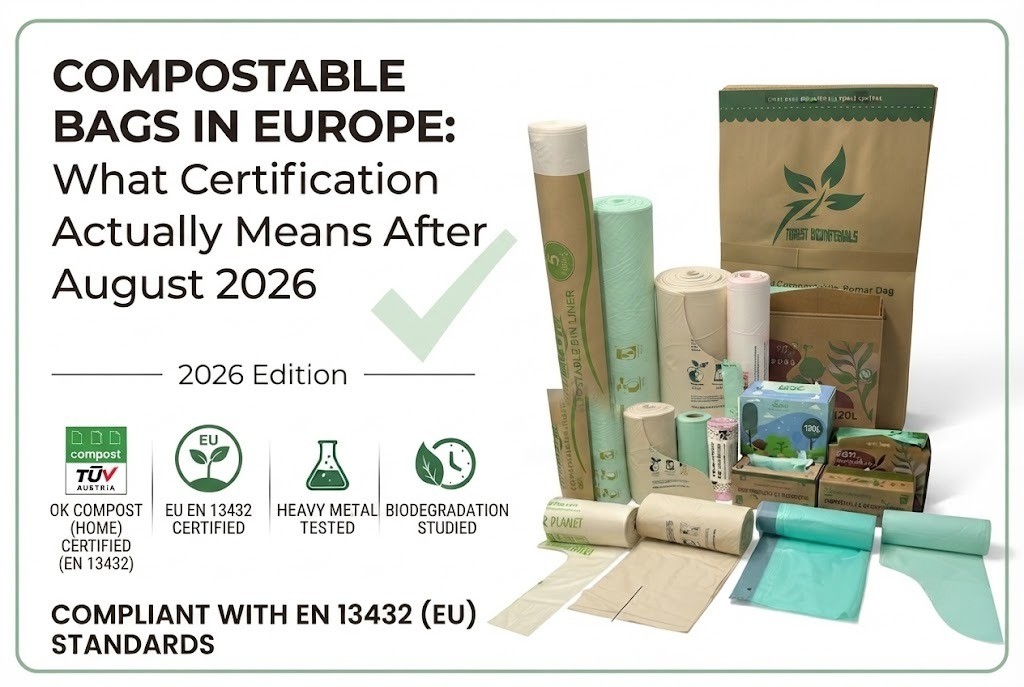
Compostable Bags in Europe: What Certification Actually Means After August 2026
PPWR enforcement begins August 12, 2026. The compliance chain — PFAS limits, EPR registration, recyclability grading — plus how France, Germany, and Italy each add their own rules on top. EN 13432, OK Compost, DIN-Geprüft, Seedling, NF T 51-800: what each one proves and when a buyer demands it by name.
Read guide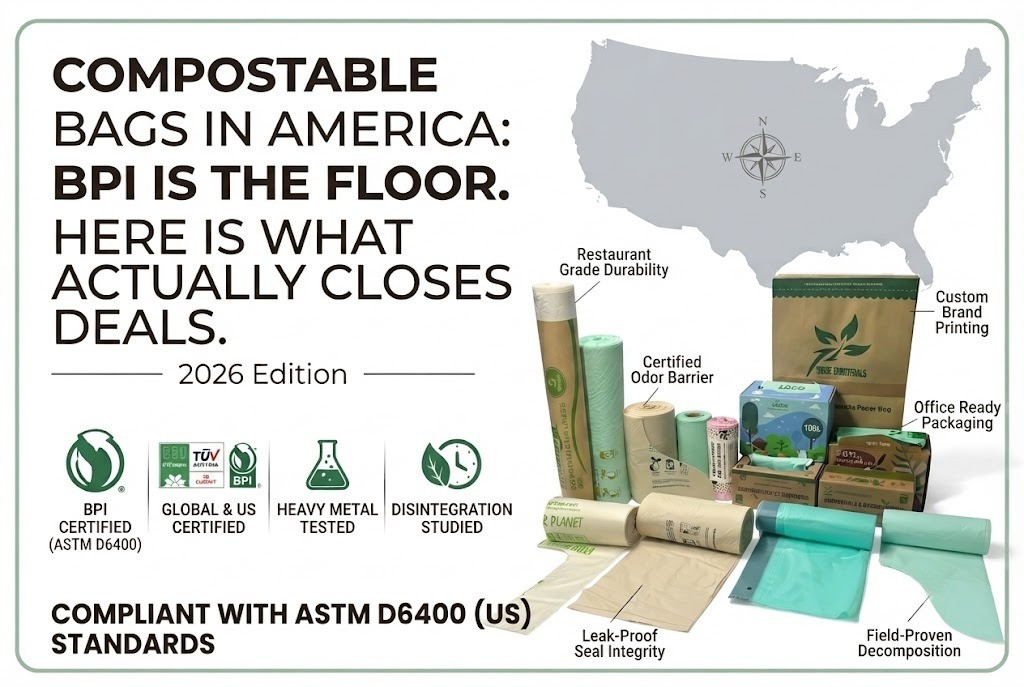
Compostable Bags in America: BPI Is the Floor. Here Is What Actually Closes Deals.
BPI certification is the baseline — but California SB 54, FTC enforcement, CMA field testing, and a 12-state PFAS patchwork have raised the bar. Three real supplier case studies show why thickness mismatches and missing CMA credentials kill more deals than missing BPI.
Read guide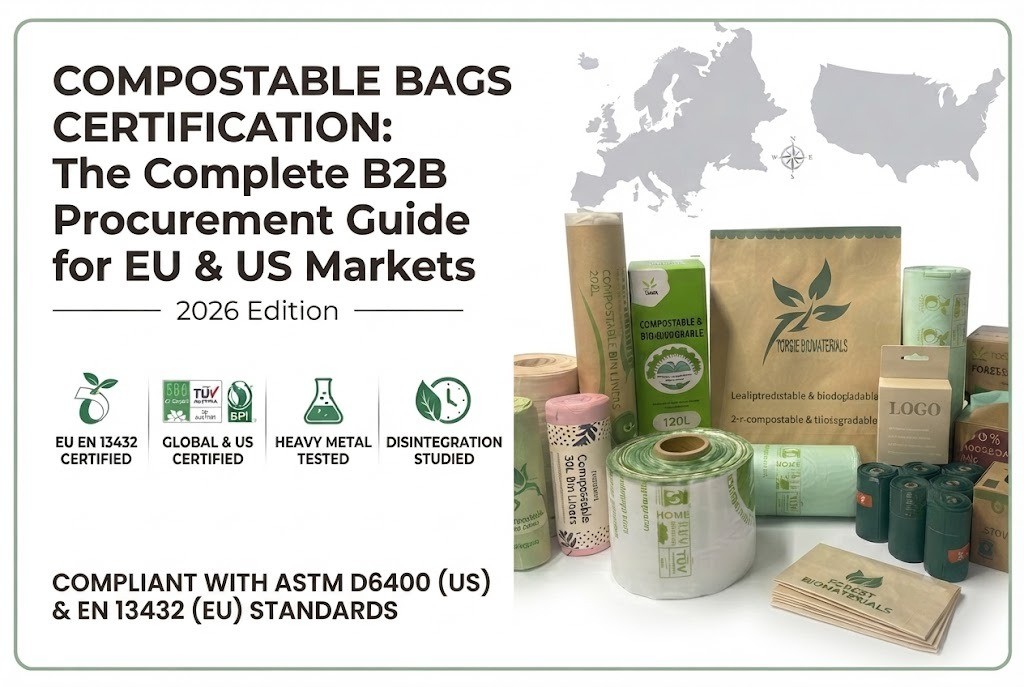
Compostable Bags Certification: The Complete B2B Procurement Guide for EU & US Markets
The full reference covering both sides of the Atlantic. Every major certification — EN 13432, ASTM D6400, BPI, OK Compost, CMA — compared in one table, plus buyer verification checklist and greenwashing traps that catch even experienced procurement teams.
Read guideCompliance FAQ
1. What certifications should compostable bags have for different markets?
The required certifications depend on the target market and disposal system. In Europe, EN 13432 is widely recognized for industrial compostable packaging, while North America commonly refers to ASTM D6400 and certification systems such as BPI. Australia and New Zealand may require compliance with AS 4736 or AS 5810 depending on whether the product is intended for commercial or home composting. Buyers should always confirm that both the material and the finished product have the appropriate certification for their intended market and application.
2. Is a compostable material certificate enough to prove the final bag is compliant?
No. Certification of the raw material alone does not automatically mean the finished bag meets compostability requirements. Compliance testing is typically based on the final product, including the complete bag structure, additives, inks, and other components. Buyers should request finished product certificates and test reports from suppliers to verify that the delivered bags meet the required standards.
3. What documents should buyers request from a compostable packaging supplier?
A reliable supplier should be able to provide documentation such as: compostability certificates for finished products, material compliance documents, laboratory test reports, declaration of conformity (where applicable), food contact compliance documents for food-related applications, and printing ink and additive information when required. The exact documentation depends on the product type, application, and destination market.
4. Can compostable bags be disposed of in regular waste streams?
Not always. Compostable bags are designed for specific disposal conditions, and their end-of-life pathway depends on local waste management infrastructure. Industrial compostable bags are generally intended for certified industrial composting facilities. If they enter landfill or conventional recycling streams, they may not perform as intended. Buyers should consider local collection programs and clearly communicate disposal instructions to end users.
5. What is the difference between industrial compostable and home compostable certification?
Industrial compostable products are tested under controlled composting conditions with higher temperatures, humidity, and microbial activity. Home compostable products must meet stricter requirements for decomposition in lower-temperature backyard composting environments. A product certified for industrial composting does not automatically qualify as home compostable. Buyers should select the appropriate certification based on their intended use and disposal scenario.