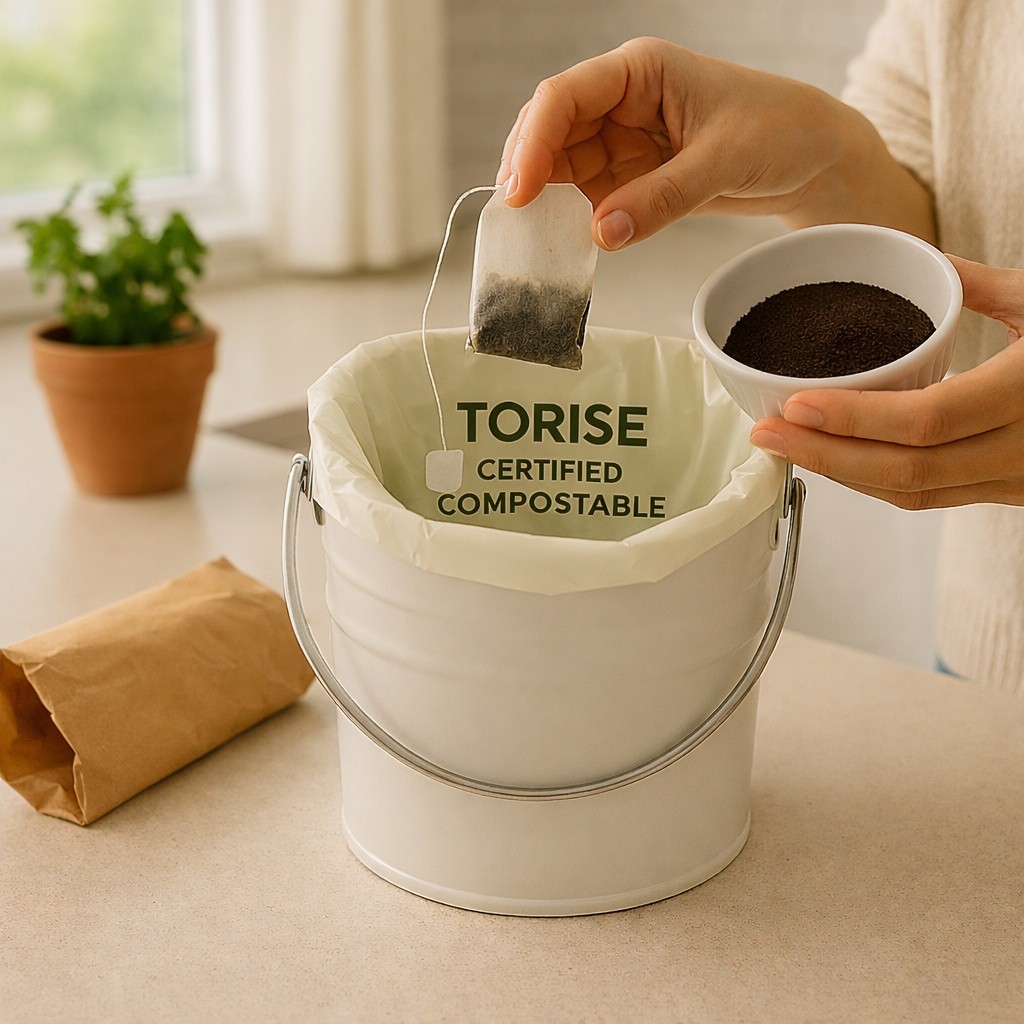
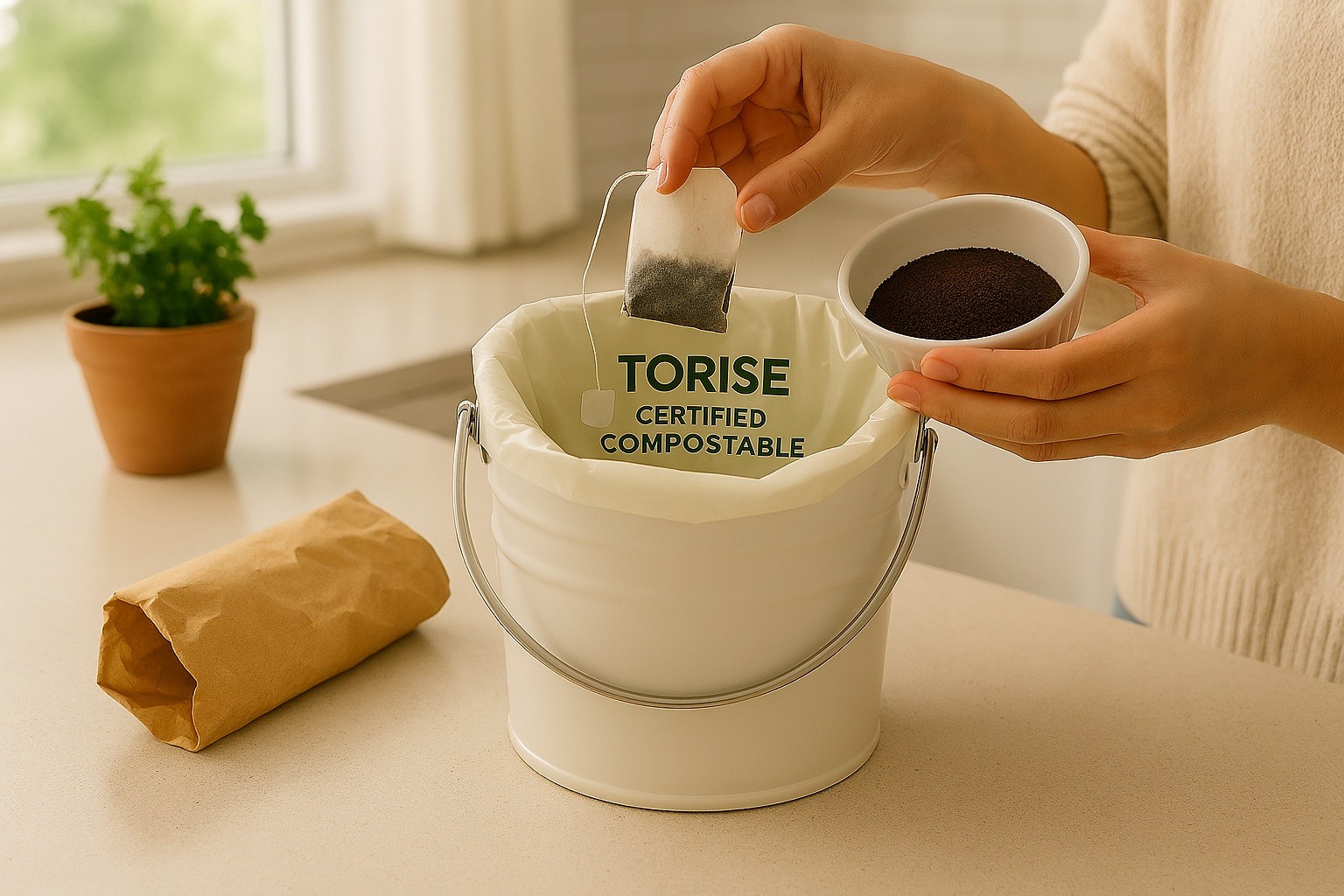
That moment of hesitation over the trash or compost bin is a universal experience for the eco-conscious. You're holding a damp tea bag, wondering, "Will this break down or ruin my compost?" The short answer is: Yes, but with critical caveats. The simplicity of composting is often undermined by synthetic additives lurking in everyday items.
This definitive guide, informed by over 14 years of research and development in sustainable biomaterials at TORISE BIOMATERIALS provides evidence-based clarity. We'll cut through the confusion around common kitchen items and map out a straightforward path to successful home composting. You'll also learn why choosing certified compostable products from trusted sources is essential for a truly waste-free, circular system.
The Golden Rule of Compostability: Nature's Blueprint
Understanding one core principle is key: True compostability means a material is derived from plants or other natural sources and will fully break down into non-toxic, nutrient-rich humus (soil) within a typical composting cycle.
The primary saboteurs of this process are synthetic materials that mimic organic ones. This includes conventional plastics, many "biodegradable" plastics, and plastic-based coatings or inks. These materials fragment or persist, contaminating the final compost with microplastics.
For this reason, Torise's product philosophy is rooted in purity. The materials we use are designed to be in harmony with natural cycles, capable of complete decomposition without leaving any harmful residues.
Your Ultimate Kitchen Compost Checklist
Apply the golden rule to everyday items. When in doubt, remember: When it comes to composting, "natural" is navigable, "synthetic" is suspect.
Paper Products: From Hero to Hindrance
Paper, being cellulosic, is an ideal carbon-rich "brown" material—when pure.
Plain Brown Paper Bags, Newspaper, Cardboard (Egg Cartons, Boxes): YES.
Tip: Tear or shred to accelerate decomposition. Remove all plastic tape, labels, or stickers.
Coated or Treated Paper Bags & Packaging: NO (for home compost).
The Why: Bags for flour, takeout, frozen foods, or bakery items often have a thin plastic (polyethylene) or wax lining for grease/moisture resistance. This coating does not break down in a home system.
The TORISE Solution: For applications requiring moisture or grease resistance—like lining a kitchen caddy or packaging goods—opt for products with verified plant-based coatings. Our compostable paper bags feature a bio-based PLA coating, offering full functionality and total compostability, leaving no synthetic traces.
The Tea Bag Conundrum: A Closer Look
This common item is a major source of contamination.
The Problem: Up to 25% of a standard tea bag by weight can be polypropylene plastic, used to heat-seal the bag. This plastic will not decompose.
Safe Practice: Tear open the used bag. If you see a fine, woven plastic mesh, compost only the leaves and dispose of the bag.
Ideal Practice: Support brands that use plastic-free, certified compostable tea bags (often stitched with cotton or a plant-based polymer like PLA).
Coffee Grounds & Filters: A Composter's Gold
Coffee Grounds: YES. A fantastic nitrogen source. They add texture and attract beneficial worms.
Paper Filters: YES (preferably unbleached). They provide a small amount of carbon. Tear them up with your used brown paper bags for a balanced mix.
Other Common Kitchen Items:
Fruit & Vegetable Scraps: YES. The essential "green" material.
Eggshells: YES. Rinse and crush for faster breakdown. They add calcium.
Bread, Pasta, Grains: IN MODERATION. Small amounts are fine. Large quantities can attract pests and cause matting.
The Absolute "No" List:
Meat, Fish, Bones, Dairy, Oily Foods: Attract pests and can create odor issues.
Diseased Plants or Pet Waste: Risk of pathogen survival.
Any Conventional Plastic, Including "Biodegradable" Bags: These are not designed for composting and will contaminate your pile. For a seamless zero-waste transfer, switch to our certified compostable garbage bags.
Building Your Home Compost: A 3-Step Master Plan
Step 1: The Smart Kitchen Collection
Begin with a dedicated countertop caddy. The liner you choose is critical—a standard plastic bag poisons the entire batch. For integrity from start to finish, use our BPI-certified compostable kitchen caddy liners. Made from renewable materials, they ensure your food scraps transfer to the compost bin without plastic contamination.
Step 2: The Art of Layering (The Brown-Green Ballet)
A thriving pile needs balance. Aim for a rough carbon-to-nitrogen (C:N) ratio of 25-30:1, practically achieved by using about 2 parts "browns" to 1 part "greens" by volume.
Greens (Nitrogen): Food scraps, coffee grounds, fresh grass clippings.
Browns (Carbon): Shredded plain paper bags, dry leaves, cardboard, straw.
Pro Tip: Keep a stash of torn TORISE PLA-coated brown paper bags next to your compost bin. When you add a scoop of wet "greens," cover it with a handful of this shredded paper to maintain balance, absorb moisture, and prevent odors.
Step 3: The Patient Cure
Keep the pile as moist as a wrung-out sponge. Turn it with a fork every 1-2 weeks to introduce oxygen. A well-maintained pile will heat up (to 130-160°F / 55-70°C), accelerating decomposition. In 3-6 months, you'll have dark, crumbly, earthy-smelling "black gold" for your garden.
"Biodegradable" vs. "Certified Compostable": The Critical Distinction
This is the cornerstone of informed eco-choices.
"Biodegradable": An unregulated, often misleading term. It simply means an item will eventually break down, potentially over decades, and may leave behind microplastics or toxic residues. It is not suitable for composting systems.
"Certified Compostable" (ASTM D6400 / EN13432): A rigorous, third-party-verified standard. It guarantees a product will completely break down into non-toxic compost within a specific timeframe (typically 90-180 days in a commercial facility), supporting healthy soil life. This is the only label that ensures an item belongs in your compost.
| Term | Meaning | Timeframe | Outcome | Use in Compost? |
|---|---|---|---|---|
| Biodegradable | Will fragment eventually. Unregulated. | Decades+ | May leave microplastics/toxins. | NO – Avoid. |
| Certified Compostable | Breaks down completely into humus. Third-party verified. | ~90-180 days | Non-toxic, nutrient-rich compost. | YES – The trusted standard. |
All TORISE BIOMATERIALS products are designed to meet this higher standard, carrying ASTM D6400 and EN13432 certifications to ensure they contribute to a genuine circular economy.Verify our certificate.
Common Composting Pitfalls & Pro Solutions
Problem: Pile is soggy, smelly, and attracts flies.
Solution: You have too many "greens." Immediately add and mix in abundant "browns" (shredded paper, dry leaves). Turn the pile for aeration.
Problem: Pile is dry and decomposition has stalled.
Solution: Add "greens" or water lightly while turning to achieve consistent, damp (not wet) moisture.
Problem: Discovering plastic pieces in finished compost.
Solution: This is contamination. Be vigilant about screening out non-compostables before adding to the bin. Use only certified compostable liners and bags.
Problem: Rodents or pests are visiting the bin.
Solution: Bury food scraps deep within the pile under a thick layer of "browns." Never compost meat/dairy/oils. Ensure your compost bin has a secure lid.
Conclusion: Embracing a Truly Circular Practice
Mastering home composting transforms waste from a problem into a resource. It's a profound step toward sustainability. This mindset logically extends to scrutinizing the disposables we use daily—opting only for those with verifiable, certified compostable credentials.
True circularity requires partners committed to verifiable science and material purity. If you are a homeowner seeking reliable solutions, a business exploring sustainable packaging, or a community organizer setting up a composting program, choosing the right materials is paramount.
Ready to ensure every element of your waste stream cycles back to the earth? Discover how TORISE BIOMATERIALS' range of certified compostable products—from kitchen liners to paper bags—can seamlessly support your zero-waste journey. Contact our team today to explore solutions tailored to your needs.