Recyclable vs Recycled vs Compostable: What Buyers Should Know (2026 Procurement Guide)
- Share
- publisher
- Rachel
- Issue Time
- Jun 11,2026
Summary
Recyclable = can be processed (depends on infrastructure);Recycled = made from recovered waste (PCR‑based);Compostable = designed for biological breakdown.
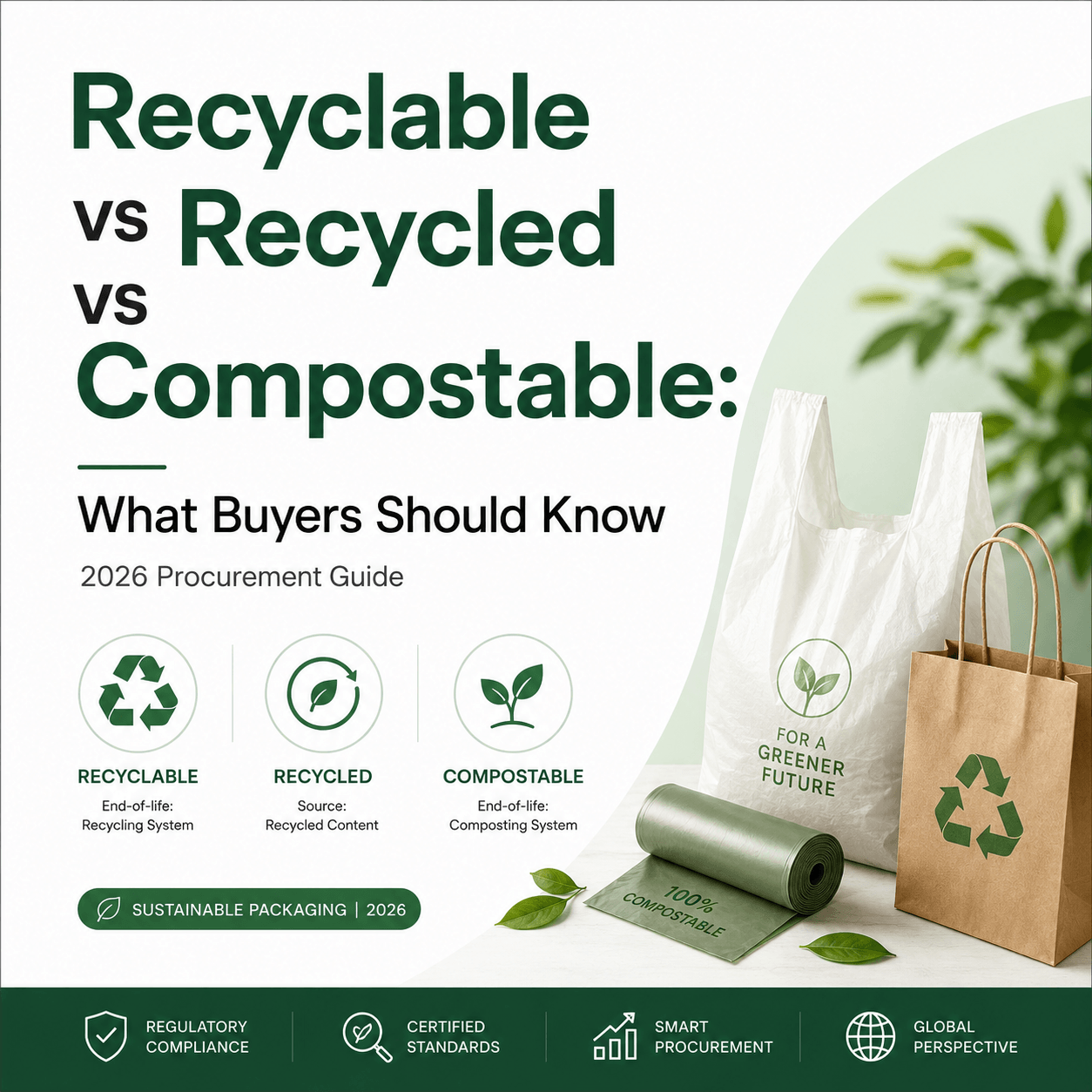
Essential differences between recyclable, recycled (PCR), and compostable packaging — definitions, certifications, and real‑world applications for procurement teams, brand owners, retailers, and sustainability leaders.
For packaging buyers, brand owners, retailers, and sustainability teams, one of the most confusing areas in sustainable packaging is the difference between recyclable, recycled, and compostable materials. Although these three terms are often used interchangeably in marketing, they represent three completely different material systems, supply chains, and end‑of‑life pathways.
Understanding this distinction is essential for regulatory compliance, ESG reporting, and real‑world packaging performance.
Why This Distinction Matters More Than Ever
Global packaging regulations are becoming stricter across Europe, North America, and Latin America. Frameworks such as the EU Packaging and Packaging Waste Regulation (PPWR), Extended Producer Responsibility (EPR) systems, and state‑level plastic legislation in the U.S. are pushing companies to clearly define:
- What materials they use
- How those materials are disposed of
- Whether environmental claims are verifiable
At the same time, regulators are increasing scrutiny of vague claims like "eco‑friendly" or "biodegradable" when not supported by certification. For procurement teams, sustainability is no longer marketing — it is compliance.
1. What Does "Recyclable" Mean?
A packaging material is considered recyclable if it can technically be collected, sorted, and reprocessed into new materials within an existing recycling system. However, recyclability depends heavily on local infrastructure. A material can be recyclable in one country and effectively non‑recyclable in another.
Common recyclable materials: Polyethylene (PE), Polypropylene (PP), PET (rigid packaging).
2. What Does "Recycled" Mean?
Recycled materials refer to plastics that have already been used, collected, processed, and converted into new raw materials. These are often referred to as PCR (Post‑Consumer Recycled) plastics.
Common recycled materials: rPE (recycled polyethylene), rPP (recycled polypropylene), rPET (recycled PET).
3. What Does "Compostable" Mean?
Compostable packaging is designed to break down into water, carbon dioxide, and biomass under controlled composting conditions, without toxic residues. Key certifications: EN 13432, ASTM D6400, BPI, DIN CERTCO.
4. Recyclable vs Recycled vs Compostable: Side‑by‑Side Comparison
| Criteria | Recyclable | Recycled (PCR) | Compostable |
|---|---|---|---|
| Core Concept | Recycling potential | Material origin | Biological decomposition |
| System Type | Industrial recycling | Circular sourcing | Composting system |
| Infrastructure Dependency | High | Low | High |
| Carbon Impact | Medium | Low-Medium | Low (if processed correctly) |
| Food Contact Use | Often allowed | Sometimes restricted | Certified cases only |
| Consumer Understanding | Medium | High | Low |
| Real‑World Reliability | Medium | High | Medium |
5. When Should Buyers Use Each Option?
Use Recyclable Packaging When:
- Strong recycling infrastructure exists
- Cost efficiency is priority
- Mono‑material structure is used
- Large‑scale retail or logistics use case
Use Recycled (PCR) Packaging When:
- ESG reporting requires recycled content
- Carbon reduction targets are important
- Circular economy strategy is required
- Slight color variation is acceptable
Use Compostable Packaging When:
- Food or organic waste packaging is needed
- Industrial composting exists locally
- Regulations support compostable systems
- Brand is sustainability‑focused
5.1 Which Is Best for Bakery / Supermarket / E‑commerce?
Bakery Packaging
Best options: Compostable bread bags, paper bags with compostable windows. Focus on EN 13432 compliance, moisture control, and food‑contact safety.
Supermarket & Grocery Retail
Best options: Reusable shopping bags, compostable produce bags, PCR plastic bags. Focus on cost per transaction, regulatory compliance, and waste infrastructure compatibility.
E‑commerce & Logistics
Best options: Recycled PE mailers (rPE), mono‑material recyclable courier bags, PCR‑content packaging. Focus on tear resistance, lightweight design, and carbon reduction via PCR content.
6. Common Procurement Mistakes
- Mistake 1: "Recyclable = will be recycled" — reality depends on infrastructure.
- Mistake 2: "Recycled = recyclable" — they are not the same system.
- Mistake 3: "Compostable works everywhere" — it only works with composting systems.
- Mistake 4: Ignoring certification — without EN 13432 or BPI, claims may be non‑compliant.
7. Regulatory Outlook (2026)
Global packaging rules are shifting toward mandatory recycled content, EPR systems expansion, compostable labeling restrictions, stronger ESG reporting requirements, and reduced greenwashing tolerance. Packaging selection is now a compliance decision, not just a cost decision.
8. Practical Buyer Decision Framework
Before selecting packaging, ask:
📋 Procurement checklist
- 1. Where is the product sold?
- 2. What infrastructure exists locally?
- 3. What certifications are required?
- 4. What is the application (food, retail, logistics)?
- 5. What is the brand positioning?
Key Takeaways
- Recyclable = can be processed (depends on infrastructure)
- Recycled = made from recovered waste (PCR‑based)
- Compostable = designed for biological breakdown
There is no universal best option. The optimal strategy for most global brands in 2026 is a hybrid packaging system combining recyclable, recycled, and compostable materials based on application needs.
※If you're not sure which plastic alternative is right for your business, this guide can help: Alternatives for Plastic Bags: A 2026 Decision Guide for Brands, Retailers, Bakeries, and Sustainability Leaders.