PPWR | What Buyers Need From Compostable Bag Suppliers
- Share
- publisher
- Rachel
- Issue Time
- Aug 26,2026
Summary
Learn how PPWR is changing compostable bag sourcing and what buyers should expect from suppliers in materials, certification, documentation and production.
The EU Packaging and Packaging Waste Regulation (PPWR) has now entered its general application phase.
Since 12 August 2026, Regulation (EU) 2025/40 has applied across the EU, introducing requirements that cover packaging design, composition, waste prevention, recyclability, reuse, labelling and the management of substances of concern.
For brands, importers, retailers and distributors sourcing sustainable packaging, this changes the conversation with suppliers.
The question is no longer simply:
“Can you make this packaging compostable?”
A more important question is:
“Can you help us select, document and manufacture the right packaging solution for our target market and application?”
That distinction matters.
PPWR covers packaging across its lifecycle, and the European Commission is continuing to publish implementation guidance and FAQs as businesses work through the new requirements.
For sustainable packaging manufacturers, this means that material selection, product development, certification, documentation and manufacturing consistency are becoming increasingly connected.
At Torise Biomaterials, this is the direction we have been building toward since 2010: combining sustainable materials, compostable and biodegradable packaging products, customization, certification and manufacturing into one supply chain.
PPWR applies to packaging regardless of material or origin and establishes requirements covering manufacturing, composition and the packaging's ability to be recyclable, reusable or otherwise recoverable.
This is important for buyers because “sustainable packaging” is not one regulatory category.
A compostable bag, a paper shopping bag, a recycled-content packaging product and a recyclable plastic package may have very different compliance considerations.
Even within compostable packaging, the appropriate solution depends on factors such as:
This is why sustainable packaging procurement is becoming less about choosing a material from a catalogue and more about choosing a fit-for-purpose packaging system.
A packaging manufacturer should not simply ask:
What size and thickness do you need?
The conversation should also include:
Where will the packaging be sold? What will it be used for? What performance does the product require? What end-of-life route is expected? What certifications or documentation does the market require? That is where manufacturing experience becomes valuable.
One of the easiest mistakes in sustainable packaging procurement is treating “compostable” as a universal answer.
It is not.
Compostability is connected to specific standards, test conditions and intended disposal environments. A product certified for industrial composting should not automatically be described as suitable for home composting.
The same principle applies to market claims.
A packaging product may have a compostability certificate, but that certificate does not automatically demonstrate compliance with every PPWR requirement.
The European Commission's implementation guidance makes clear that certification schemes can provide useful evidence in relevant contexts, while the PPWR itself remains the basis for determining the applicable legal requirements.
For buyers, this leads to a better procurement approach:
Certification + Product Specification + Testing + Material Information + Technical Documentation rather than: Certification = Complete Compliance
This distinction is especially important when developing private-label packaging for different countries or markets.
The new regulatory environment is not simply asking manufacturers to produce “greener” products.
It is pushing manufacturers to improve the entire product development process.
At Torise, we see five areas as particularly important.
There is no single sustainable material that is ideal for every packaging application.
For example, a compostable shopping bag has different requirements from a produce bag, garbage bag, courier mailer or food-contact package.
Material selection may need to consider:
Torise works with compostable materials including PBAT and PLA-based formulations and starch-based materials, allowing packaging specifications to be developed around the intended application rather than treating every product as the same material solution.
Our certified material portfolio also includes EN 13432-certified compostable resin, providing a third-party verified starting point for applications such as shopping bags, garbage bags and produce bags.
Start with the application, then select the material. Not the other way around.
Sustainable packaging also needs to perform its basic job.
A packaging product that fails during transportation, leaks during use or requires excessive material to achieve the required strength is not necessarily a better packaging solution.
This is why packaging development should consider both:
For different Torise products, this can mean evaluating:
For example, produce bags may require a different balance of strength and flexibility from garbage bags, while courier bags need different performance characteristics from shopping bags.
This application-based approach also supports packaging minimisation.
PPWR places greater emphasis on reducing unnecessary packaging and using resources more efficiently. The European Commission describes packaging minimisation as a central objective of the regulation.
For manufacturers, that means asking:
Can we achieve the required performance with the right amount of material?
Sometimes sustainability comes from changing the material.
Certification is an important part of sustainable packaging procurement, but buyers should look beyond a logo on a product page.
What exactly is certified? And: Which standard does the certification cover?
Torise's certification portfolio includes product and material certifications covering major compostability standards and schemes, including EN 13432, ASTM D6400/BPI, AS 4736 and AS 5810, as well as OK Compost and OK Compost HOME certifications for applicable products.
For example, Torise holds BPI certification for finished compostable bags under ASTM D6400, while also maintaining BPI certification for compostable resin.
This distinction matters.
For buyers developing their own packaging, it is therefore important to understand whether the available certification applies directly to the finished product they intend to place on the market.
For many buyers, the biggest challenge is not obtaining a certificate.
It is putting together the documentation needed to support their own compliance review.
Depending on the product and market, a packaging supplier may need to provide information such as:
This is why a manufacturer with an established technical and quality system can provide more value than a supplier that only produces to a sample.
Torise's current certification portfolio includes ISO 9001, ISO 14001 and ISO 45001, together with product-specific certifications and other supply-chain certifications.
The objective is not to claim that a supplier can make every customer “PPWR compliant.”
Final regulatory responsibility depends on the specific product, market and economic operator.
The manufacturer's role is different:
Provide the product, evidence and technical information that allow the customer to carry out the appropriate compliance assessment. That is a much more useful and realistic way to support buyers.
There is another part of compliance that is sometimes overlooked.
A certificate or test report describes a defined material or product specification.
But buyers do not purchase certificates.
They purchase thousands or millions of finished products.
That means production consistency matters.
A sustainable packaging manufacturer needs systems for controlling variables such as:
Torise has been developing compostable and biodegradable products since 2010 and operates an integrated manufacturing supply chain covering sustainable materials and finished packaging products.
Our BRCGS certification scope, for example, covers production activities including pelleting, film blowing, printing, bag making and packing, providing a structured quality and traceability framework across the manufacturing process.
For a buyer, this creates an important distinction:
A sustainable packaging supplier should not only be able to make a compliant sample. It should be able to reproduce the agreed specification consistently at commercial scale.
Torise's sustainable packaging portfolio is broader than a single compostable product category.
Our manufacturing capabilities cover both sustainable materials and finished packaging products, allowing customers to develop different packaging formats through one supply chain.
These products can be developed around different applications, dimensions, thicknesses, printing requirements and packaging formats.
For food-contact applications, the compliance review also needs to consider the relevant food-contact requirements in addition to sustainability claims.
This is particularly important as PPWR also introduces restrictions on PFAS in food-contact packaging above specified limits from August 2026.
For applications where paper-based packaging is appropriate, material sourcing and chain-of-custody information can also matter.
Torise maintains FSC certification for applicable paper packaging, supporting traceability of certified paper materials.
This illustrates a broader point:
Sustainable packaging is not one material.
Depending on the application, the appropriate solution may involve compostable polymers, paper, recycled content or another material strategy.
The manufacturer's job is to help identify the appropriate route.
Many B2B buyers do not need an off-the-shelf packaging product.
They need packaging that fits: That makes customization an important part of sustainable packaging development.
At Torise, customization can involve:
Material → Thickness → Size → Structure → Printing → Packaging → Private Label
For example, a customer developing a private-label compostable bag may need a specific thickness, custom dimensions, multi-colour printing, retail packaging and documentation for its target market.
Instead of treating those requirements as separate suppliers, an integrated manufacturer can develop them as one product specification.
PPWR increases the importance of technical capability, but commercial buyers still need another thing:
Supply reliability.
A product may pass testing, but if a manufacturer cannot reproduce it consistently or scale production after the first successful trial order, the buyer still has a problem.
Torise has more than 14 years of experience in compostable and biodegradable product manufacturing.
Our current manufacturing operation covers more than 10,000 m², with approximately 30,000 tons of annual production capacity, supporting both development-stage projects and larger commercial orders.
That scale matters for private-label customers because sustainable packaging often develops in stages:
Sample → Trial Order → Market Launch → Repeat Production → Scale-Up The supplier needs to be capable of supporting the entire journey.
For buyers developing new sustainable packaging for the EU or other regulated markets, we recommend treating compliance as part of product development rather than something checked after production.
A practical workflow looks like this: What is the packaging used for? Where will the packaging be placed on the market? Choose the material based on performance, sustainability objectives, certification and end-of-life requirements. Verify whether the packaging performs as required under its intended application. Match the product with the applicable standards, certifications, test reports and technical documentation. Environmental claims and disposal instructions should be reviewed carefully before mass printing. Once the product specification is confirmed, production can move into commercial scale. This approach reduces the risk of discovering a material, documentation or product-specification issue after the packaging has already been manufactured. If you are currently sourcing sustainable packaging, the following questions can help you evaluate suppliers. Do not stop at “compostable.” A resin certificate and a finished-product certificate are not necessarily interchangeable. Ask what specifications, test reports and certificates are available for the exact product. Can the supplier adjust thickness, dimensions, structure, printing and packaging? If you are launching your own brand, ask whether the supplier can manage packaging development through production. A successful sample is only the beginning of a B2B packaging project. Ask about raw-material control, in-process inspection, finished-product testing and traceability.
These questions help move supplier evaluation beyond:
“Who has the lowest price?” toward: “Who can support this product from development to market?”
The most important change may not be a single PPWR requirement.
It is the direction of the market.
Sustainable packaging is moving away from broad claims such as:
“Eco-friendly.” “Biodegradable.” “Compostable.” And toward a more specific model: Material + Application + Performance + Evidence + End-of-Life + Documentation That is a healthier direction for the industry.
It gives buyers more information and makes it harder for unsupported environmental claims to compete with properly documented products.
For manufacturers, it also raises the standard. A sustainable packaging manufacturer needs more than a green material. It needs the ability to connect: Material Development This is where Torise is building its position.
Torise Biomaterials has been developing compostable and biodegradable alternatives to conventional plastics since 2010. Our product portfolio spans compostable bags, sustainable packaging materials and other packaging solutions for international markets.
Our approach is straightforward: Start with the customer's application. Then determine: And finally: How can the product be manufactured consistently at commercial scale?
This approach allows us to support customers that need more than a standard packaging product — including customized specifications, private-label development, certification support and scalable manufacturing.
For global brands, retailers, distributors and importers, that means working with a supplier that can connect sustainability goals with real manufacturing capability.
PPWR is making sustainable packaging procurement more detailed — but it is also making the requirements clearer.
The right supplier should be able to help you connect:
Material → Product → Certification → Documentation → Production
Whether you are developing compostable bags, sustainable food packaging, paper packaging or another private-label solution, Torise can help you evaluate the appropriate material and packaging specification for your application and target market.
Tell us what you are looking to package, where you plan to sell it, and what requirements you need to meet. We can start from there.PPWR and Sustainable Packaging: What Global Buyers Need From Their Packaging Supplier
What Does PPWR Change for Sustainable Packaging Buyers?
The supplier matters more than before.
“Compostable” Is Not a Universal Compliance Claim
How Sustainable Packaging Manufacturers Are Adapting
1. Material Selection Starts With the Application
2. Product Design Needs to Consider More Than Compostability
Sometimes it comes from using less material.
Often, it requires both.
3. Certification Needs to Be Matched to the Product and Market
A certified resin and a certified finished product are not necessarily the same thing.
4. Technical Documentation Is Becoming Part of the Product
5. Manufacturing Consistency Matters After Certification
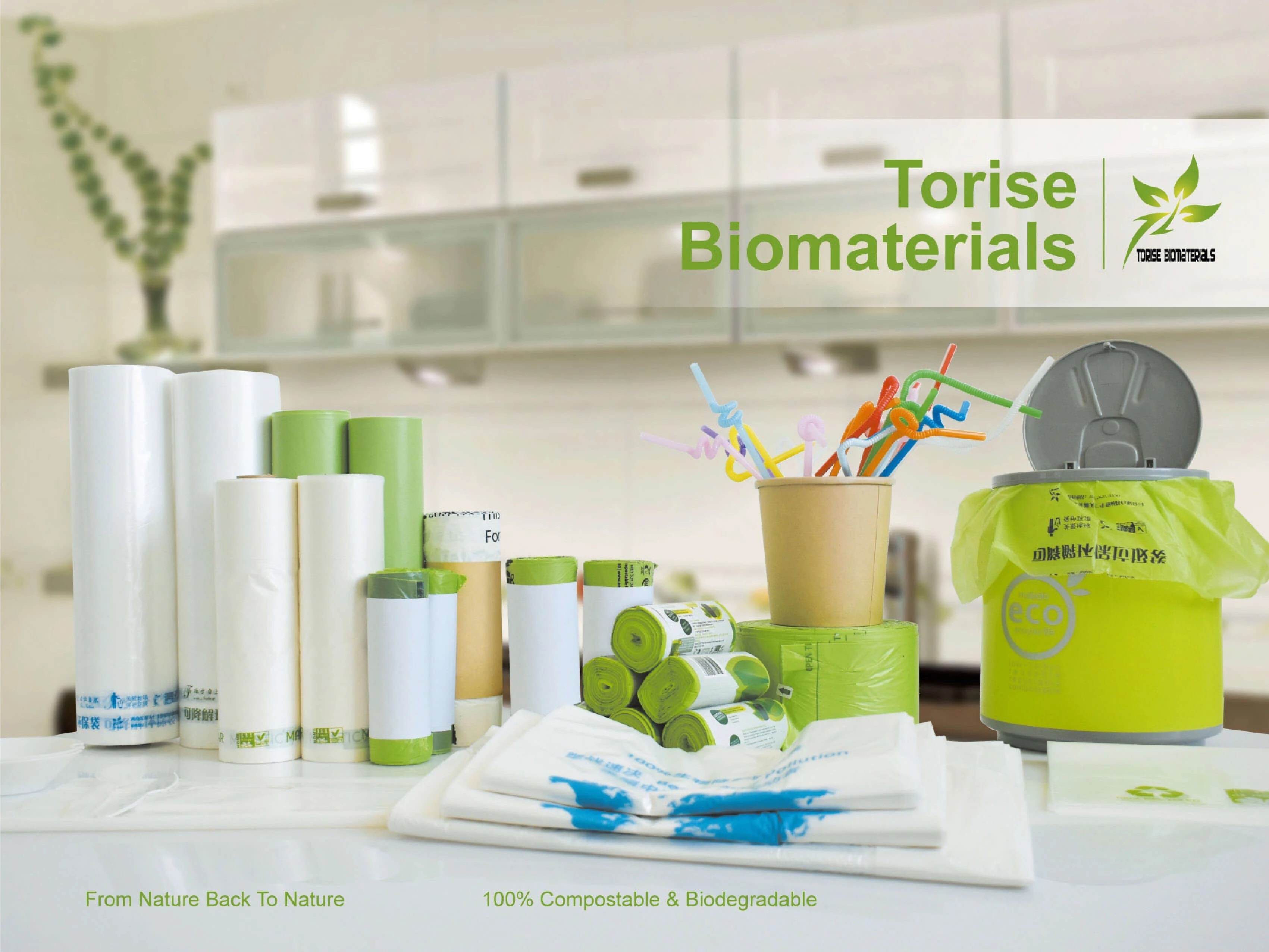
From Material to Finished Product: What Torise Can Manufacture
Compostable Bags
Sustainable Food Packaging
Sustainable Paper & Fiber Packaging
Customization Becomes More Important Under PPWR
Why Factory Capability Matters
A More Practical Compliance Workflow for Sustainable Packaging
Step 1 — Define the Application
Shopping? Food? Waste collection? E-commerce? Apparel? Produce?Step 2 — Define the Target Market
EU? UK? North America? Australia? Multiple regions?Step 3 — Select the Appropriate Material
Step 4 — Develop the Product Specification
Step 5 — Sample and Test
Step 6 — Review Certification and Documentation
Step 7 — Finalise Artwork and Claims
Step 8 — Mass Production
What Should Buyers Ask a Sustainable Packaging Manufacturer?
1. What materials do you actually manufacture?
Ask about the material structure and formulation.2. Which certifications apply to the finished product?
3. Can you provide technical documentation?
4. Can you customize the material and product specification?
5. Can you support private-label production?
6. Can you scale after the trial order?
7. How is production consistency controlled?
PPWR Is Changing the Meaning of Sustainable Packaging
→ Product Design
→ Testing
→ Certification
→ Documentation
→ Manufacturing
→ Quality Control
→ Commercial Supply
From Sustainable Materials to Commercial Packaging
FAQ
Looking for a Compostable Bags Supplier?