PFAS-Free & Compostable Food Packaging: The End of Forever Chemicals in Packaging
- Share
- publisher
- Rachel
- Issue Time
- May 26,2026
Summary
The challenge is balancing grease resistance, food safety compliance, compostability, recyclability, and cost efficiency. This is why PFAS‑free packaging is no longer just about materials — it is becoming a technical and regulatory capability.
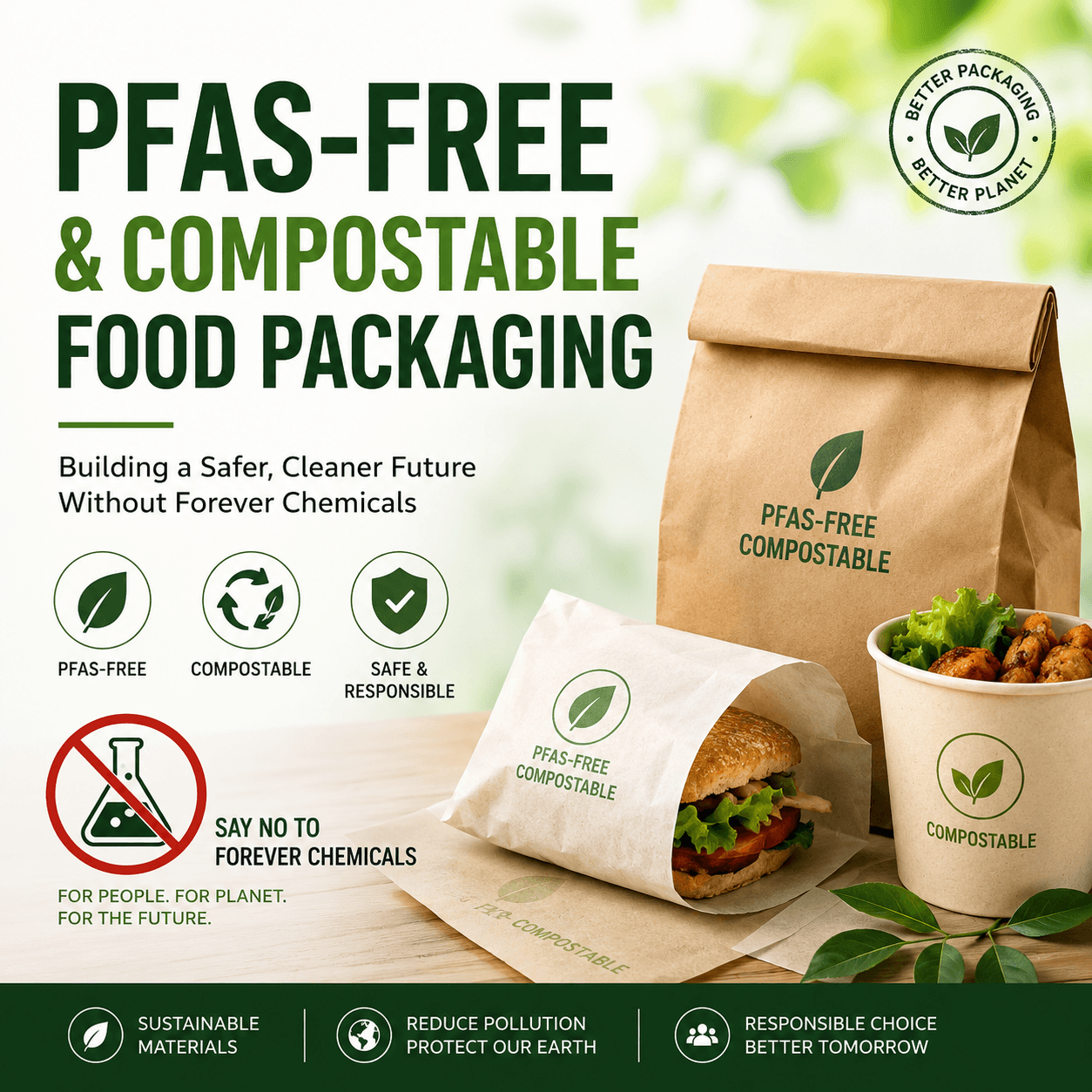
1.What Is PFAS?
PFAS stands for Per- and Polyfluoroalkyl Substances, a large group of synthetic chemicals widely used for their oil-resistant, water-resistant, and heat-resistant properties. Because PFAS can repel grease extremely effectively, they have historically been used in:
- ·Greaseproof paper bags
- ·Fast food wrappers & takeaway packaging
- ·Burger and sandwich wraps
- ·Microwave popcorn bags
- ·Disposable tableware
The problem is that PFAS do not break down easily in nature. Some types can remain in soil and water for decades, which is why they are often called “Forever Chemicals”. In recent years, growing environmental and health concerns have pushed PFAS into the spotlight across Europe and North America.
2.Why Are Europe and the U.S. Restricting PFAS?
PFAS regulations are no longer just a niche environmental topic. They are becoming a mainstream compliance issue for food packaging manufacturers and brands. Governments are tightening restrictions mainly because PFAS may:
- ·Accumulate in the human body over time
- ·Contaminate soil and groundwater
- ·Remain in the environment for extremely long periods
- ·Interfere with recycling and composting systems
Several U.S. states have already introduced restrictions on PFAS in food packaging, while the European market
is moving toward stricter chemical compliance standards across sustainable packaging materials. For food
brands, PFAS is quickly becoming both a compliance risk and a brand reputation risk.
As a result, buyers are increasingly asking suppliers questions like:
“Is your packaging PFAS‑free? Do you use fluorinated coatings? Can your greaseproof paper pass fluorine
testing? Is the packaging both compostable and PFAS‑free?”
3.Why Did Traditional Greaseproof Paper Often Contain PFAS?
Food packaging frequently needs oil and moisture resistance. Without a protective barrier, grease can quickly penetrate ordinary paper, leading to leakage, staining, and poor user experience. For decades, PFAS offered a simple and highly effective solution because they created a strong invisible barrier against oil, water, and heat. That is why PFAS became common in French fry bags, bakery paper bags, snack packaging, fast food wrapping paper, and hot dog paper bags. However, as environmental awareness increased, the industry began searching for safer alternatives that could still provide grease resistance without relying on fluorinated chemicals.
4.How Is PFAS‑Free Grease Resistance Achieved Today?
Modern PFAS‑free packaging technologies are developing rapidly. Instead of fluorinated chemicals, manufacturers now use alternative barrier solutions to achieve grease resistance. Common PFAS‑free technologies include:
- ·Water‑based coatings
- ·Bio‑based barrier coatings
- ·Natural mineral coatings
- ·PLA or compostable biopolymer coatings
- ·Mechanical refining and dense fiber technology
The challenge is balancing grease resistance, food safety compliance, compostability, recyclability, and cost efficiency. This is why PFAS‑free packaging is no longer just about materials — it is becoming a technical and regulatory capability.
5.What Is the Relationship Between PFAS‑Free and Compostable Packaging?
This is one of the most important questions in sustainable packaging today. Many buyers assume that “compostable packaging automatically means PFAS‑free” — but that is not always true. A package may technically meet compostability standards while still containing certain fluorinated substances, depending on the material system and certification requirements used. That is why the market is increasingly demanding packaging that is both certified compostable AND PFAS‑free.
In practical terms, this means packaging should break down safely in composting environments, avoid harmful fluorinated chemicals, support cleaner organic waste streams, and align with evolving global regulations. For brands targeting environmentally conscious consumers, combining compostability with PFAS‑free technology is becoming a strong competitive advantage.
| Packaging Type | PFAS-Free | Certified Compostable | Grease Resistance (KIT) | Best For |
|---|---|---|---|---|
| Water‑based acrylic coating | ✅ Yes | ❌ Typically no | KIT 6–8 | Recyclable paper, fast food wraps |
| PLA / PBAT biopolymer (compostable) | ✅ Yes | ✅ BPI / OK compost | KIT 10–12 | Compostable hot dog bags, heavy sauces |
| Glassine (densified paper) | ✅ Yes | ❌ Unless certified | KIT 4–6 | Short‑term liners, dry oily food |
| Legacy fluorochemicals (PFAS) | ❌ No | ❌ No (banned) | KIT 12 | Being phased out globally |
6.The Future of Sustainable Food Packaging
The packaging industry is moving beyond simple “eco‑friendly” marketing claims. Today’s buyers increasingly care about regulatory compliance, material transparency, chemical safety, certified compostability, and PFAS‑free verification. In other words, sustainable packaging is no longer only about appearance or branding. It is about creating packaging systems that are safer, cleaner, and better aligned with the future circular economy. As global regulations continue to evolve, PFAS‑free compostable packaging is expected to become not just a market preference — but an industry standard.
From greaseproof bags to compostable food service ware, the message is clear: the era of “forever chemicals” is ending. Advanced PFAS‑free barriers — especially compostable biopolymer coatings — deliver the same reliable performance while protecting people and the planet. Choose transparency, demand verification, and lead the shift towards truly sustainable packaging.