EU Packaging Regulations in 2026: What Global Buyers Need to Know Before Sourcing Sustainable Packaging
- Share
- publisher
- Rachel
- Issue Time
- Aug 5,2026
Summary
2026 EU rules demand certified compostable and recycled-content packaging. Learn how to choose suppliers, meet compliance, and build a future-proof sustainable packaging strategy.
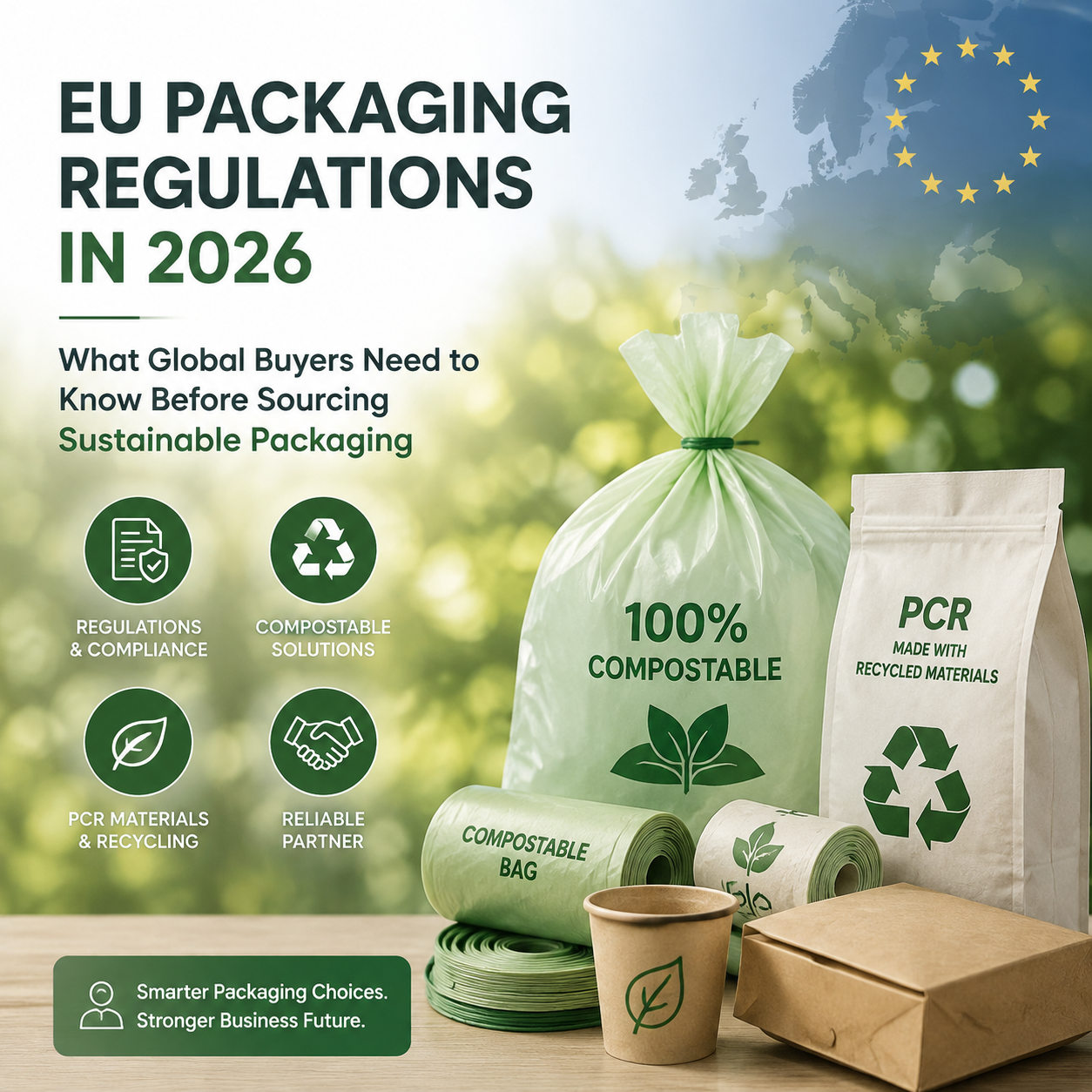
The packaging industry is facing a major shift. For brands, retailers, and distributors sourcing packaging products for the European market, sustainability is no longer only a marketing topic — it has become a procurement requirement.
New packaging regulations, recycled content targets, and restrictions on certain materials are changing how companies select suppliers and evaluate packaging solutions. For buyers planning their 2026–2027 packaging strategy, understanding these changes early can help avoid compliance risks and supply chain disruptions. In the past, many companies adopted sustainable packaging mainly to strengthen their brand image. Today, the decision is increasingly driven by: European retailers and brand owners are asking suppliers more detailed questions: Packaging suppliers are no longer evaluated only by price and production capacity. Compostable packaging is gaining attention, but it is not designed to replace every plastic application. For buyers, the key question is not: “Is compostable packaging better?” The better question is: “Where does compostable packaging provide the most practical value?” Applications where compostable packaging is increasingly adopted include: In these applications, recycling can be difficult because food residue or organic contamination affects recycling efficiency. Certified compostable materials, including PLA and PBAT-based formulations, provide an alternative pathway for specific applications. While compostable packaging addresses certain waste challenges, PCR materials support another important sustainability goal — reducing dependence on virgin plastics. Many brands are increasing the use of recycled content in packaging to improve resource efficiency and meet sustainability commitments. PCR packaging is commonly considered for: However, buyers should carefully evaluate: As sustainable packaging demand increases, sourcing decisions are becoming more complex. A reliable supplier should provide: There is no single sustainable packaging material that fits every product. The future of packaging will be based on selecting the right solution for the right application: For global buyers, the key challenge is no longer simply finding “green packaging”. It is finding a packaging partner that understands regulations, materials, and real-world applications. In 2026, key EU regulations focus on recyclability, minimum recycled content, compostability certification, and packaging waste reduction. Buyers must ensure their packaging meets the revised Packaging and Packaging Waste Directive (PPWD) targets, which include mandatory recycled content for plastic packaging and strict restrictions on single-use plastics. Compliance depends on material type, application, and certification. For compostable packaging, look for EN 13432 or OK compost INDUSTRIAL certification. For recycled content, you need traceable documentation from your supplier. Working with a supplier that provides technical data sheets and third-party test reports is essential. No. Compostable packaging is most valuable when the packaging is likely to be contaminated with food or organic waste, making recycling impractical. In regions with well-established recycling systems, recyclable packaging may be the better environmental choice. The optimal solution depends on the product, local waste infrastructure, and regulatory requirements. Beyond price and capacity, evaluate the supplier’s material expertise, certification support, manufacturing stability, and customization capabilities. A reliable partner should provide clear documentation, consistent quality, and proactive guidance on regulatory changes. Supply chain transparency and traceability are equally critical.1. Sustainable Packaging Is Becoming a Purchasing Requirement, Not an Optional Choice
2. Compostable Packaging: Where Does It Make Sense?
3. PCR Packaging: Meeting Recycled Content Expectations
4. Choosing the Right Supplier Matters More Than Ever
5. The Future of Packaging Will Be Application-Based
Frequently Asked Questions (FAQ)