Compostable Zipper Bags: A Practical Guide to Food Storage & Freezer Applications
- Share
- publisher
- Rachel
- Issue Time
- Aug 28,2026
Summary
Learn how compostable zipper bags work for food storage and selected freezer applications, including materials, customization, certifications, performance, and buying considerations.
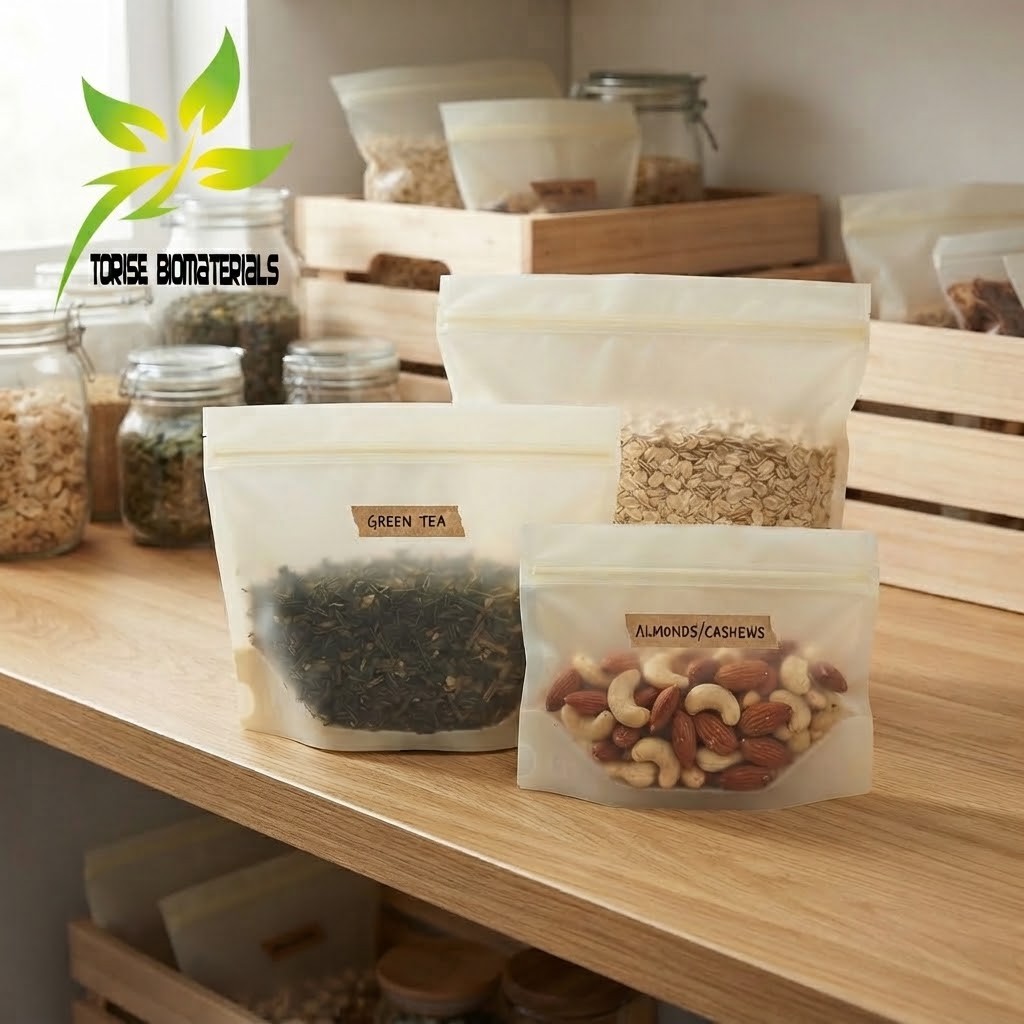
Compostable Zipper Bags: A Practical Guide to Food Storage & Freezer Applications
Compostable zipper bags designed for food storage, retail packaging, and selected freezer applications. Torise provides custom sizes, material options, printing, private-label development, and bulk manufacturing for brands, retailers, distributors, wholesalers, and food businesses.
Whether you need resealable packaging for dry foods, ingredients, snacks, or selected frozen products, our compostable zipper bag solutions can be developed around your product requirements, target market, and packaging specifications.
Compostable Zipper Bags for Commercial Packaging
A compostable zipper bag combines a convenient resealable closure with a compostable material system. The format is designed for products that benefit from easy opening, closing, storage, and handling.
For commercial buyers, the right bag is not determined by material alone. Size, thickness, zipper performance, product compatibility, food-contact requirements, storage conditions, and applicable compostability standards all need to be considered together.
Torise works with B2B buyers to develop compostable zipper bags for different packaging programs, including:
- Food and ingredient packaging
- Snack and dry-food packaging
- Retail and private-label products
- Selected frozen-food applications
- Household and consumer products
- Wholesale and distribution programs
Our goal is to provide a packaging format that balances practical functionality with the material and compliance requirements of the target application.
Why Choose Compostable Zipper Bags?
A resealable bag can offer practical advantages for both consumers and businesses. When compostable materials are appropriate for the intended application, a compostable zipper bag can combine familiar packaging functionality with a different end-of-life positioning.
Resealable Convenience
The zipper closure allows the bag to be opened and closed repeatedly, making it suitable for products that are used over multiple occasions.
Compostable Material Options
Compostable material systems can be selected according to the intended application, required performance, and applicable certification requirements.
Flexible Packaging Format
Zipper bags can be developed in different dimensions and thicknesses to accommodate different products, filling quantities, and handling requirements.
Custom Branding
Custom printing allows brands and retailers to add logos, product information, barcodes, instructions, and other required artwork.
Private-Label Development
The packaging can be developed around a customer's own product specifications and brand requirements.
Bulk Manufacturing
Commercial production supports distributors, wholesalers, retailers, and brands purchasing compostable zipper bags in larger quantities.
Compostable Zipper Bags for Food Storage
Compostable zipper bags can be considered for selected food storage applications where resealability and convenient handling are important.
Typical applications may include:
- Dry foods
- Snacks
- Grains
- Seeds
- Tea
- Bakery ingredients
- Powdered products
- Pet treats
- Selected prepared foods
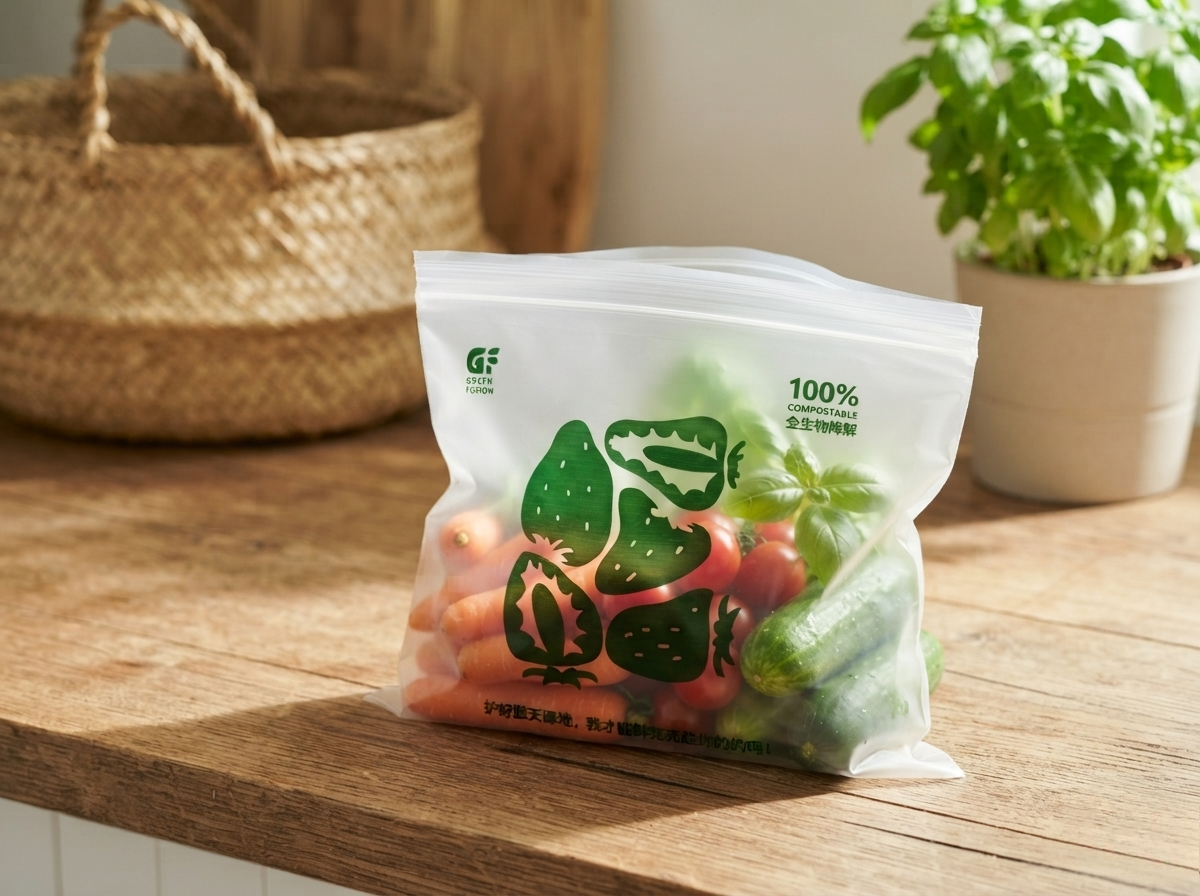
The appropriate bag structure depends on the characteristics of the product being packaged.
For example, products with higher moisture, oil, or oxygen sensitivity may require different packaging considerations from dry products. For this reason, the material structure and performance requirements should be evaluated according to the actual application rather than selecting a bag based only on its material category.
Food Contact Considerations
Food-contact suitability is separate from compostability.
A compostable bag intended for food packaging should be evaluated according to the final material structure, intended food type, conditions of use, and regulations applicable to the destination market.
Where required, documentation and compliance information can be evaluated according to the specific packaging application.
Compostable Freezer Bags for Selected Frozen Food Applications
Compostable freezer bags are designed around a more demanding storage environment than general-purpose resealable bags.
Freezing can affect the flexibility and mechanical behavior of packaging materials. A bag intended for freezer use therefore needs to be considered in relation to the expected temperature range, product characteristics, filling process, storage duration, and handling conditions.
Torise can develop compostable bag structures for selected freezer applications based on the required specifications.
Potential applications may include:
- Selected frozen foods
- Frozen ingredients
- Portion-packed foods
- Meal preparation
- Food storage
- Retail frozen-food packaging
The suitability of a specific compostable zipper bag for freezing should always be confirmed against the intended temperature and application requirements.
What Makes a Compostable Freezer Bag Different?
A compostable freezer bag is not simply a standard compostable zipper bag placed in a freezer.
The complete bag structure needs to be considered for the conditions it may experience during filling, freezing, storage, thawing, transportation, and consumer handling.
- Low-Temperature Performance: The material should maintain appropriate flexibility and mechanical performance under the intended freezing conditions.
- Zipper Performance: The zipper needs to provide reliable opening and closing while maintaining the required functionality during storage and handling.
- Mechanical Strength: Freezing and handling can place additional stress on flexible packaging. Material thickness and structure should therefore be selected according to the product and expected use conditions.
- Seal Performance: The bag structure and sealing process should be evaluated to help maintain the required package integrity.
- Food-Contact Requirements: For food applications, the final packaging structure must be considered against applicable food-contact requirements in the target market.
For commercial freezer-bag programs, buyers should provide the expected storage temperature and application details so the appropriate structure can be evaluated.
Compostable Zipper Bag Material Options
The material system is one of the most important factors when developing a compostable zipper bag.
Torise works with compostable material systems including PLA and PBAT-based formulations, with material selection depending on the intended application and required performance.
| Material System | Key Considerations | Potential Applications |
|---|---|---|
| PLA + PBAT | Flexibility and compostable packaging performance | Food and retail packaging |
| PLA + PBAT + Starch | Bio-based material formulation options | Selected packaging applications |
| Customized Material Structure | Application-specific performance requirements | Private-label and commercial programs |
Material selection should consider:
- Flexibility
- Tensile strength
- Tear resistance
- Sealing performance
- Zipper compatibility
- Moisture requirements
- Product characteristics
- Temperature conditions
- Food-contact requirements
- Applicable compostability standards
For freezer applications in particular, the material structure should be evaluated for the intended temperature range rather than assuming that every compostable film is suitable for freezing.
Custom Compostable Zipper Bags
Different products require different packaging specifications. Torise supports customization for brands, retailers, wholesalers, distributors, and food businesses.
Custom Size
Bag dimensions can be developed around the product size, filling volume, storage requirements, and available shelf or freezer space.
Custom Thickness
Film thickness can be selected according to product weight, handling conditions, durability requirements, and application.
Custom Printing
Custom printing can include:
- Brand logos
- Product graphics
- Product information
- Barcodes
- Usage instructions
- Regulatory information
- Recycling or compostability information where applicable
Custom Zipper
The zipper configuration can be considered according to the required opening, closing, and handling experience.
Custom Packaging
Commercial packing quantities, carton configuration, labeling, and shipping requirements can be discussed as part of the packaging program.
Compostable Zipper Bags for Private Label Brands
For brands and retailers, packaging is part of the product experience as well as the supply chain.
Torise supports private-label compostable zipper bag programs from packaging requirements through commercial production.
A typical development process includes:
- Product Requirements — Define the product, application, bag size, storage conditions, target market, and expected order quantity.
- Material Selection — Evaluate suitable material systems based on performance, application, and applicable compliance requirements.
- Packaging Development — Confirm dimensions, thickness, zipper configuration, printing, and packaging specifications.
- Sample Approval — Review bag appearance, dimensions, closure performance, and other agreed specifications.
- Bulk Production — Proceed with commercial manufacturing after specifications and samples are approved.
- Packing & Shipment — Products are packed according to the agreed commercial and shipping requirements.
Compostable Zipper Bags vs. Compostable Freezer Bags
Although the two formats may share a similar zipper-bag structure, their application requirements can be different.
| Requirement | Compostable Zipper Bags | Compostable Freezer Bags |
|---|---|---|
| Resealable closure | ✓ | ✓ |
| Food storage | Suitable for selected applications | Suitable for selected applications |
| Custom sizing | ✓ | ✓ |
| Custom printing | ✓ | ✓ |
| Retail packaging | ✓ | ✓ |
| General storage | ✓ | ✓ |
| Freezer use | Application dependent | Key design consideration |
| Low-temperature performance | Application dependent | Specifically evaluated |
| Private-label development | ✓ | ✓ |
The key difference is the intended storage environment.
A general compostable zipper bag should not automatically be marketed as a freezer bag unless its material structure and performance have been evaluated for the required freezing conditions.
Compostable Zipper Bags vs. Conventional Zipper Bags
The choice between compostable and conventional plastic packaging depends on the product, performance requirements, target market, disposal infrastructure, and business objectives.
| Requirement | Compostable Zipper Bags | Conventional Plastic Zipper Bags |
|---|---|---|
| Resealable format | ✓ | ✓ |
| Custom sizes | ✓ | ✓ |
| Custom printing | ✓ | ✓ |
| Private-label packaging | ✓ | ✓ |
| Compostable material options | ✓ | — |
| Conventional plastic structure | — | ✓ |
| Sustainability positioning | Compostability-focused | Conventional plastic packaging |
| Application suitability | Depends on specification | Broad |
Compostable packaging should not be selected solely because it carries a compostable claim. Buyers should also consider the applicable compostability standard, disposal environment, product requirements, and local market regulations.
Compostable Zipper Bag Certifications & Compliance
Compostability certification and food-contact compliance address different requirements.
The applicable certifications depend on the final product structure, intended application, and destination market.
Depending on the product and market, relevant standards or requirements may include:
- EN 13432
- ASTM D6400
- AS 4736
- AS 5810
- Applicable food-contact requirements
- Applicable regional packaging regulations
Certification should be evaluated based on the final finished product rather than assumed solely from the raw material.
For food packaging, buyers should also identify the destination market and intended food-contact conditions when discussing compliance requirements.
How to Choose the Right Compostable Zipper Bag
Selecting the right compostable zipper bag starts with the product rather than the packaging material.
- Define the Product — Identify what will be packaged and whether it is dry, moist, oily, powdered, frozen, or otherwise sensitive.
- Determine the Storage Conditions — For freezer applications, specify the expected temperature range and storage duration.
- Determine the Bag Size — Provide the product dimensions and approximate filling quantity so the appropriate bag dimensions can be evaluated.
- Select the Material Structure — Consider flexibility, strength, sealing performance, zipper compatibility, and compostability requirements.
- Select the Thickness — The required thickness depends on product weight, handling conditions, transportation, and expected durability.
- Consider Printing — Determine whether you need an unprinted bag or custom printed packaging for your brand.
- Confirm Food-Contact Requirements — If the bag will contact food, identify the destination market and intended conditions of use.
- Confirm Compostability Requirements — Determine which compostability standards or certifications are relevant to the market where the packaging will be sold.
- Confirm Commercial Requirements — Discuss MOQ, packaging configuration, lead time, shipping requirements, and private-label specifications before placing a bulk order.
Compostable Zipper Bags Wholesale & Bulk Supply
For wholesalers, distributors, retailers, and brands, packaging requirements often extend beyond the bag itself.
Torise supports commercial compostable zipper bag programs with options for:
- Custom dimensions
- Custom material structures
- Custom printing
- Private-label packaging
- Commercial packing
- Bulk production
- Export shipment support
MOQ depends on the bag size, material structure, printing requirements, packaging specifications, and production program.
For an accurate quotation, buyers can provide the required size, material preference, estimated quantity, application, printing requirements, and destination market.
Why Choose Torise for Compostable Zipper Bags?
Material Development
Torise works with compostable material systems including PLA and PBAT-based formulations for different packaging applications.
Packaging Customization
Bag dimensions, thickness, printing, zipper configuration, and packaging specifications can be developed according to commercial requirements.
Private-Label Support
Brands and retailers can develop packaging around their own product specifications, artwork, and market requirements.
Compliance Considerations
Certification and compliance requirements can be evaluated according to the final packaging structure, application, and target market.
Commercial Manufacturing
Production capabilities support wholesale, distribution, retail, and private-label packaging programs.
B2B Supply
Torise works with brands, retailers, wholesalers, distributors, and other commercial buyers seeking customized food packaging solutions.
Frequently Asked Questions
Looking for a Compostable Zipper Bag Manufacturer?
Whether you need compostable zipper bags, compostable freezer bags, or custom resealable packaging, Torise can help evaluate the appropriate packaging structure for your application.
Our team can then evaluate the appropriate material and packaging specifications for your project.