Compostable Grocery Bags: Materials & Selection Guide for B2B Buyers
- Share
- publisher
- Rachel
- Issue Time
- Oct 19,2026
Summary
Learn how to choose compostable grocery bags for B2B purchasing. Explore material options, bag styles, custom specifications, and key considerations for wholesale buyers.
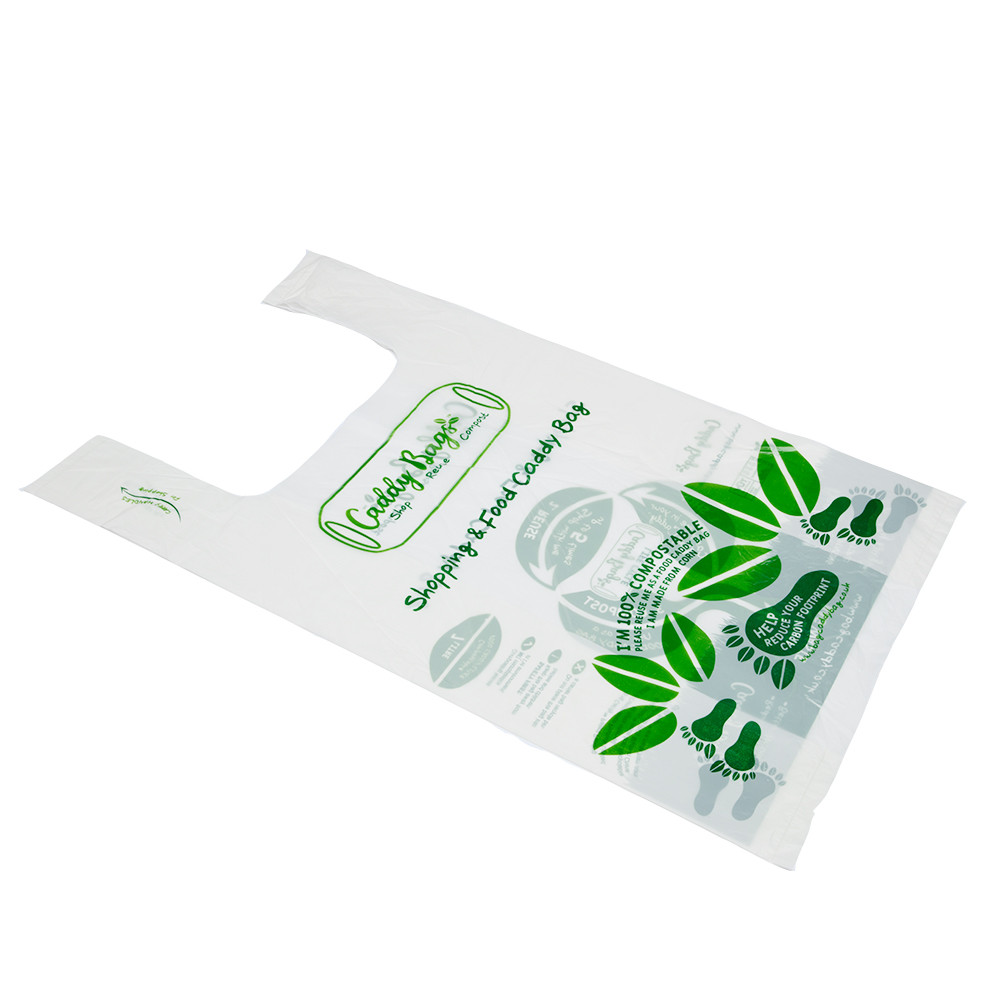
For supermarkets, grocery retailers, packaging distributors, and private-label businesses, sourcing compostable grocery bags involves more than choosing an alternative to conventional plastic. Buyers need suitable carrying performance, consistent quality, customizable designs, and reliable bulk supply.
Torise manufactures custom compostable shopping bags for retail and grocery applications, offering flexible specifications, multiple bag styles, custom printing, and wholesale production. This guide explains what B2B buyers should consider and how to plan a custom order.
Compostable grocery bags are designed to meet applicable compostability requirements under specified composting conditions. They can be used by supermarkets, grocery stores, retailers, and other businesses looking for alternatives to conventional plastic shopping bags.
Depending on the required performance and application, compostable bags can be formulated using materials such as PBAT, PLA, and starch-based components. The formulation, thickness, dimensions, and manufacturing process all influence the finished product's performance.
B2B buyers should verify that the relevant certification and test documentation covers the specific finished bag and its intended application. Industrial compostability and home compostability are different conditions and should not be treated as interchangeable.
Different retail environments require different bag structures. Choosing the right style depends on the products being carried, checkout requirements, and the intended customer experience.
T-shirt bags feature two integrated handles and a familiar shopping-bag shape. They are suitable for supermarkets, grocery stores, convenience stores, and general retail applications. Buyers can specify dimensions, thickness, printing, and packaging according to the intended use.
D-cut bags feature a die-cut handle opening near the top of the bag. This structure can suit retail packaging applications where an integrated handle opening is preferred. Dimensions, film thickness, and handle configuration should be confirmed according to the intended load and use.
Not sure which style fits your application? Share your intended use, product weight, preferred dimensions, and target market with Torise to discuss a suitable configuration.
Custom manufacturing allows buyers to align bag specifications with their retail requirements rather than relying only on standard sizes.
Final specifications should be confirmed through technical review and, where appropriate, sample evaluation before mass production.
A manufacturer's ability to accommodate different dimensions, thicknesses, and order volumes is an important consideration for wholesale buyers. The following anonymized order data illustrates the range of custom bag specifications supplied by Torise.
What these orders demonstrate
Custom bag production can accommodate different dimensions, film thicknesses, and order quantities. The right specification should be selected according to the intended application rather than thickness alone.
Actual carrying performance also depends on material formulation, bag structure, sealing quality, and load distribution. When requesting a quotation, provide your preferred dimensions, thickness, estimated quantity, and packaging requirements.
Torise's minimum order quantity (MOQ) for the relevant custom bag orders is 500 kg. Please confirm the applicable MOQ for your selected product configuration when requesting a quotation.
Because bags of different sizes and thicknesses have different weights per piece, the number of bags in a 500 kg order will vary according to the final specifications. A smaller, thinner bag may yield more pieces per kilogram than a larger, thicker bag.
Before placing a bulk order, buyers should confirm:
For importers, distributors, supermarket groups, and private-label buyers, supplier selection should consider more than the quoted unit price.
Comparing suppliers across these factors helps buyers evaluate the overall suitability of a product for their market and purchasing plan.
Torise supplies compostable materials and finished compostable bags for B2B customers, including retailers, supermarkets, distributors, and businesses seeking customized packaging.
Whether you are sourcing bags for a grocery chain, developing a private-label product, or expanding your wholesale packaging range, Torise can discuss your requirements and help identify a suitable configuration.
Request a quotation for custom compostable grocery bags.
Share your preferred bag style, dimensions, thickness, estimated order quantity, and destination market to start the discussion.
Compostable Grocery Bags: Custom Sizes, Wholesale Orders, and What Buyers Need to Know
1. What Are Compostable Grocery Bags?
2. Which Compostable Grocery Bag Style Should You Choose?
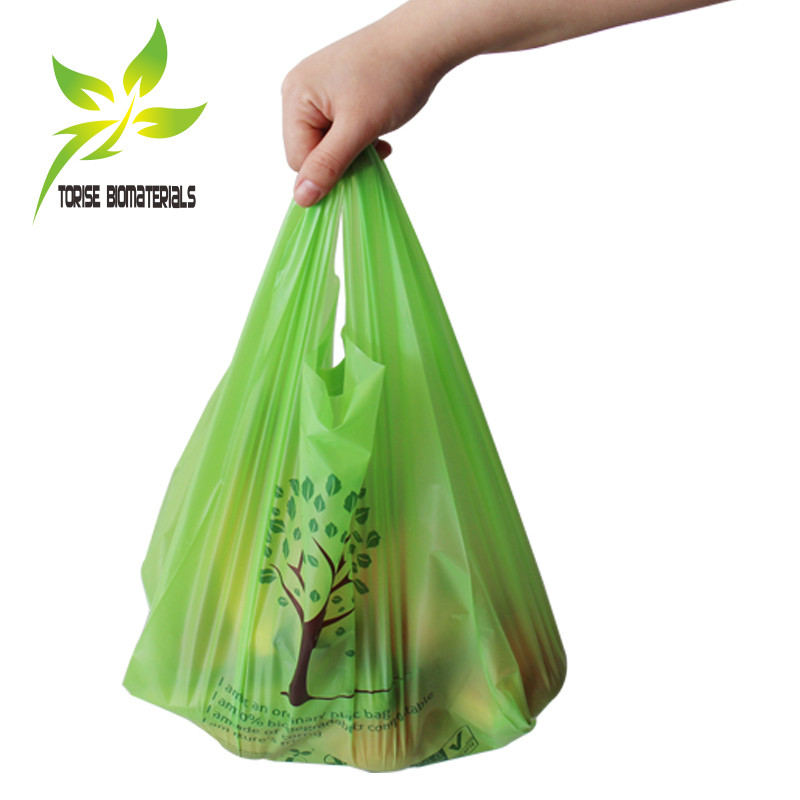
T-Shirt Bags with Handles
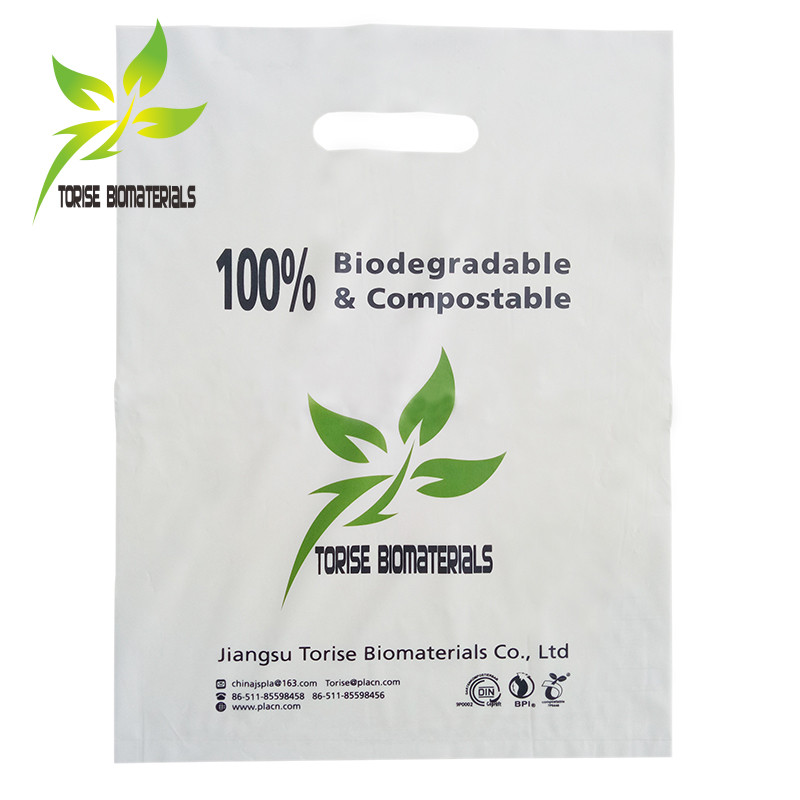
D-Cut Bags
3. Custom Compostable Grocery Bags: What Can You Specify?
4. Custom Compostable Shopping Bags: Order Examples
Customer
Bag Size (mm)
Thickness (μm)
Quantity (pcs)
Total Weight (kg)
Customer A
400 × 520
16
100,000
798
Customer B
470 × 520
37
56,000
1,127.8
Customer C
370 × 500
18
200,000
1,598
Customer D
480 × 660
30
350,000
7,983.5
Customer E
440 × 530
20
1,200,000
13,428
5. Wholesale Compostable Grocery Bags: MOQ and Bulk Ordering
6. How to Evaluate a Compostable Grocery Bag Manufacturer
7. Source Custom Compostable Grocery Bags from Torise