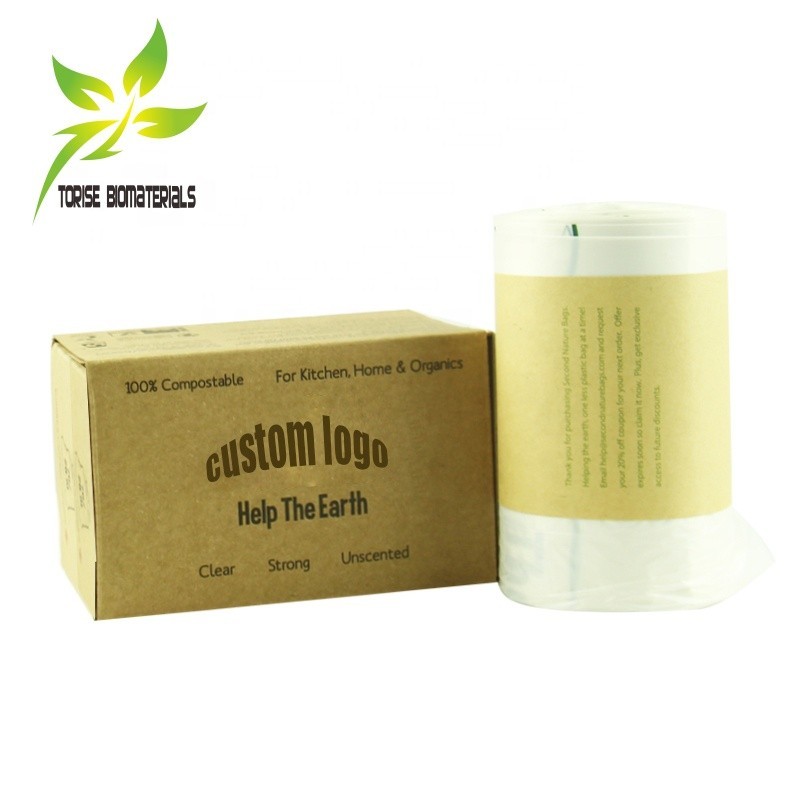
For procurement managers, brand owners, and waste management professionals: Not all compostable bags are created equal. With tightening regulations (EU PPWR, US FTC Green Guides) and growing consumer demand for zero-waste solutions, choosing certified compostable bin liners requires a deep understanding of materials, certifications, and application-specific performance. This guide walks you through everything from kitchen caddy liners to heavy-duty yard waste bags, including drawstring and T‑shirt style options.
More than 40% of municipal solid waste is organic material that could be composted. Yet conventional plastic bin liners contaminate compost streams and take centuries to break down. Switching to certified compostable kitchen waste bags and yard waste bags is no longer just an environmental choice — it's becoming a regulatory requirement in many regions. For B2B buyers, selecting the right product means balancing performance, certification, cost, and end‑of‑life infrastructure.
🔍 Core differences: Which bag for which waste stream?
Compostable kitchen waste bags
Designed for food scraps, coffee grounds, and vegetable peels. Usually 3–13 gallon capacity, often with wave-top or drawstring closure. Must be leak-proof and compatible with municipal food-waste collection.
Compostable yard waste bags
Larger capacity (30–60 gallons) for grass clippings, leaves, and branches. Require higher puncture resistance and tear strength. Often used in municipal leaf collection programs.
Drawstring & T‑shirt compostable bags
Drawstring bags offer easy closure and carrying; T‑shirt bags mimic conventional retail bags. Ideal for branded consumer products or retail takeaway programs.
1. Why certification matters: BPI, EN 13432, OK compost
Certification is the single most important factor when sourcing certified compostable bin liners. Without third-party validation, a “biodegradable” claim may be meaningless — or even illegal in markets like the EU. Key certifications to look for:
- BPI (ASTM D6400) – North American standard for industrial compostability. Requires 90% biodegradation within 180 days.
- EN 13432 – European standard; similar to ASTM D6400 but with stricter disintegration and ecotoxicity tests.
- OK compost HOME – Certification for home composting (ambient temperatures). Essential for products sold via e‑commerce to residential users.
- AS 5810 / AS 4736 – Australian standards for home and industrial compostability.
Torise’s compostable trash bags carry BPI, EN 13432, OK compost HOME, and AS 5810 certifications — giving you full regulatory confidence across North America, Europe, and Oceania.
2. Material chemistry: PLA, PBAT, cornstarch & performance
High-quality compostable kitchen waste bags are typically made from PLA (polylactic acid), PBAT (polybutylene adipate terephthalate), and cornstarch blends. PLA provides stiffness and heat resistance; PBAT adds flexibility and toughness. For yard waste bags, higher PBAT content or multi-layer films improve puncture resistance. Drawstring and T‑shirt bags often use similar blends but require additional engineering for seal strength and handle durability.
3. Technical selection matrix: which bag for your application
| Application | Recommended Style | Key Requirements | Typical Capacity |
|---|---|---|---|
| Kitchen caddy / food waste | Wave-top, drawstring, or star-sealed | Leak-proof, odor control, fits 5-10L bins | 3–13 gallons |
| Yard / garden waste | Flat or wave-top, extra thick | High tear strength, UV resistance (if stored outdoors) | 30–60 gallons |
| Retail / branded consumer bags | Drawstring or T‑shirt | Custom printing, easy closure, aesthetic packaging | 8–13 gallons |
| Municipal programs | Flat star-sealed liners | Compatibility with automated collection, high volume | 13–96 gallons |
4. Kitchen vs. yard waste bags: key differences
Compostable kitchen waste bags are designed for frequent use, often with tie‑handles or wave tops for easy closure. Thickness typically ranges from 15–25 microns, balancing strength with rapid degradation in industrial composting facilities. Compostable yard waste bags, on the other hand, need to withstand heavier, sharper materials like branches. They are often 25–40 microns thick and may include additional puncture-resistant layers. Some yard bags are also compatible with home composting, though check for OK compost HOME certification.
5. Drawstring vs. T‑shirt compostable bags: which is right for your brand?
For B2B buyers developing private-label products, style matters. Drawstring compostable bags offer superior convenience: the integrated cord allows users to close and carry the bag without touching waste. This feature is highly valued in residential and commercial settings, justifying a higher retail price. T‑shirt compostable bags (with die-cut handles) mimic conventional supermarket bags, making them ideal for retail takeaway or as an eco‑friendly alternative for grocery stores. Both styles can be custom-printed with water-based inks and are available with BPI or EN 13432 certification.
📌 B2B insight: Our data shows that drawstring compostable bags have a 15-20% higher customer satisfaction rating in municipal programs due to ease of use. However, T‑shirt bags often have a lower unit cost, making them preferable for high-volume, low-margin applications.
6. Environmental impact & cost considerations
While certified compostable bags typically cost 20–40% more than conventional plastic liners, the total cost of ownership must account for waste diversion savings, regulatory compliance, and brand value. For municipalities, using certified compostable yard waste bags reduces contamination in compost streams, lowering processing costs. For brands, switching to drawstring compostable bags or T‑shirt bags enhances sustainability credentials and can justify premium pricing.
7. Checklist for B2B buyers: how to evaluate suppliers
- Verify certificates: Request current BPI, EN 13432, or OK compost HOME certificates for the specific finished product (not just resin).
- Test for real-world conditions: Ask for leak-proof and tensile strength test data (ASTM D1709).
- Assess printability: Water-based inks only; confirm color fastness and adhesion for custom branding.
- Check MOQ and lead times: Typical MOQ for custom-printed drawstring bags starts at 50,000–100,000 pieces; lead time 25–35 days.
- Request samples: Always order pre-production samples to verify thickness, seal integrity, and handle strength.
- Confirm logistics: Ensure supplier can ship DDP to your target markets (US, EU, UK, Australia).
8. Why Torise Biomaterials is your trusted partner for compostable bags
Torise Biomaterials specializes in R&D and manufacturing of certified compostable products. Our product line includes certified compostable bin liners for kitchen, yard, and commercial use, as well as drawstring and T‑shirt bags for retail brands. Key advantages:
- ✅ Full certification suite: BPI (ASTM D6400), EN 13432, OK compost HOME, AS 5810.
- ✅ Custom sizes, thicknesses (12–40 microns), and printing (up to 4 colors, water-based inks).
- ✅ Drawstring, wave-top, flat, and star-sealed designs.
- ✅ OEM/ODM services: from concept to finished retail packaging.
- ✅ Fast sample turnaround (7–10 days) and responsive B2B support.
Whether you need a reliable source for compostable kitchen waste bags for municipal collection, or you're launching a branded line of drawstring compostable bags, Torise provides the technical expertise and production capacity to meet your goals.