Can You Compost Vegetable Bags? What Happens After Use
- Share
- publisher
- Rachel
- Issue Time
- Sep 21,2026
Summary
Can you compost vegetable bags? Learn when compostable produce bags can be composted, why certification is not enough, and what to check before disposal.
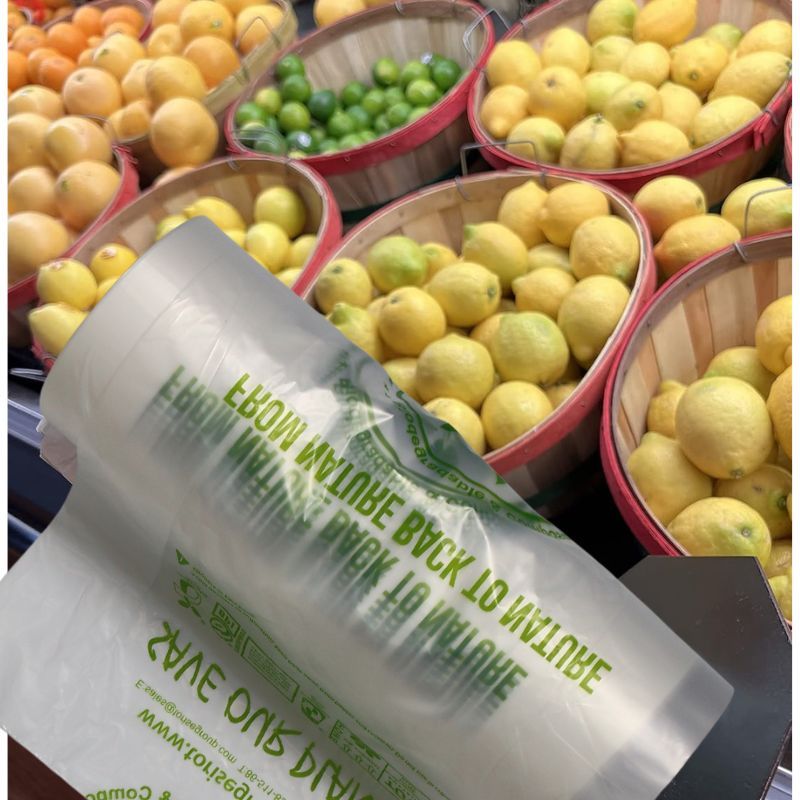
Can you compost vegetable bags?
Sometimes — but not every vegetable bag, and not in every composting system.
A bag labeled “compostable” may be designed to break down in a commercial
composting facility, while another product may be certified for home composting.
A conventional plastic produce bag, on the other hand, should not be placed in
compost simply because it is thin or used for food.
The key is to look at the bag's certification, composting environment,
and local disposal requirements.
Only if the bag is specifically suitable for your composting system
and your local program accepts it.
This distinction matters.
A certified compostable bag is tested against defined composting conditions.
For example, BPI's certification system covers commercial compostability,
while products with its home-compostability designation have also been
assessed for home composting.
Compostable does not automatically mean home compostable.
And certified compostable does not automatically mean accepted by your
local compost collection program.
This depends on where you live and where your organic waste goes.
California provides a good example.
CalRecycle states that most jurisdictions in California do
not allow compostable plastic film bags in organic waste collection
bins or carts. It also notes that very few composting facilities in
California accept and compost these bags.
California's organic waste regulations allow jurisdictions to decide whether
compostable plastics can enter their green-container collection system.
If they are accepted, the receiving facility must be able to process and
recover the material.
“It's compostable, so it goes in the green bin.”
Not necessarily.
Check the requirements of your local composting program first.
The same principle applies outside California. Local collection systems,
composting facilities and accepted materials can differ significantly.
This is where home compostability becomes important.
A bag designed for industrial or commercial composting should not
automatically be put into a backyard compost pile.
Industrial composting facilities can operate under controlled conditions,
including managed temperature, moisture, aeration and processing time.
Home composting environments are much more variable.
If home composting is the intended end-of-life route, look for a certification
or claim specifically covering home compostability rather
than relying on the word “compostable” alone.
A certified compostable bag is designed to undergo biological degradation
under the conditions covered by its applicable standard or certification.
But the actual end-of-life pathway still matters.
A bag that is certified for commercial composting may perform as intended
when sent to an appropriate industrial composting operation. But if it is
rejected by the local facility, it may instead end up being treated as
residual waste.
This is why compostability and waste infrastructure need to be
considered together.
Material
→
Certification
→
Composting Conditions
→
Local Acceptance
→
Actual End of Life
All five matter.
For supermarkets, grocery retailers, produce brands and food-packaging
distributors, “compostable” should be treated as a specification —
not simply a marketing word.
Before purchasing, check:
For buyers looking for a custom produce bag format,
Torise also provides
custom compostable produce bags
with options for bag dimensions, thickness, roll configuration and
custom printing, depending on the application and market requirements.
For manufacturers, the challenge is not simply making a bag that can
meet a compostability standard.
The finished product also needs to match the
application, target market and end-of-life pathway.
At Torise, compostable food packaging can be developed around different
market and application requirements, including clear produce roll bags
and other flexible food packaging.
Depending on the product and target market, supporting documentation may
include certifications or compliance information such as
EN 13432, BPI/ASTM D6400 and DIN CERTCO.
Our broader biomaterials supply chain also includes
ISCC PLUS, while FSC-certified paper materials can be
considered for relevant paper packaging projects.
The objective is not simply to make a bag that carries the word
“compostable.”
It is to help buyers understand:
What is the bag made from? What has been certified? Where can it be composted? Will the intended facility accept it?
Can you compost vegetable bags?
Sometimes — if the bag is designed and certified for the relevant
composting environment, and the local composting program accepts it.
A certification is important evidence of compostability, but it does
not guarantee that every municipal or commercial composting facility
will accept the product.
For consumers, check your local program before putting a
compostable produce bag in the compost bin.
For B2B buyers, go one step further:
verify the finished bag, certification, intended composting
conditions and local end-of-life pathway before making a
compostability claim.
Can You Compost Vegetable Bags? What Happens After Use
Can I Put Produce Bags in My Compost Bin?
Can Compostable Vegetable Bags Go in Food Waste?
Can I Compost Vegetable Bags at Home?
What Happens to a Compostable Produce Bag After Use?
What Should Buyers Check Before Choosing Compostable Vegetable Bags?
Ask whether the finished bag is certified, rather than assuming
certification of a resin automatically covers the final product.
Depending on the market and product, this may include
EN 13432, ASTM D6400/BPI or DIN CERTCO.
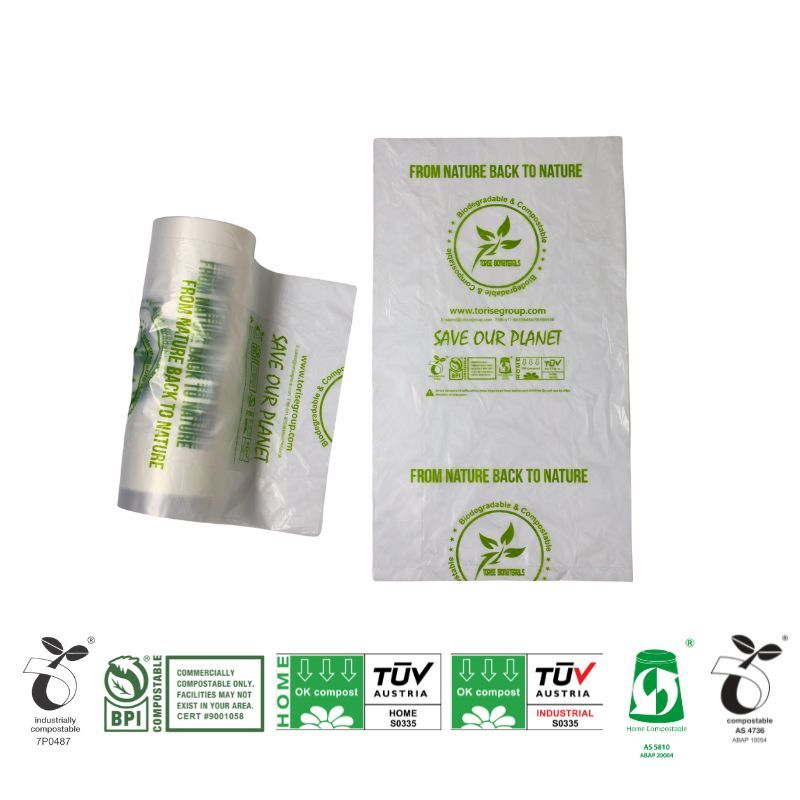
Is the bag intended for industrial composting, home composting,
or another defined system?
Will the intended composting facility actually accept the bag?
Compostability is only one requirement. Produce bags may also need
suitable strength, puncture resistance, sealing performance,
moisture management and food-contact compliance.
What This Means for Compostable Produce Bag Suppliers
The Bottom Line