Bio-Based vs. Biodegradable: Key Differences for Packaging Buyers
- Share
- publisher
- Rachel
- Issue Time
- Oct 16,2026
Summary
Bio-based and biodegradable describe two different properties of a material. Bio-based refers to the origin of its raw materials, while biodegradable refers to its ability to be broken down by microorganisms under specified conditions.
Bio-Based Describes the Origin. Biodegradable Describes the Process.
Bio-based and biodegradable describe two different properties of a material. Bio-based refers to the origin of its raw materials, while biodegradable refers to its ability to be broken down by microorganisms under specified conditions. For packaging buyers, understanding this distinction is essential when comparing sustainable materials, evaluating environmental claims, and selecting packaging that meets specific end-of-life requirements. Bio-based materials are made partly or wholly from biological resources, such as corn, sugarcane, or other renewable feedstocks. Their bio-based content can vary, and a bio-based material is not necessarily biodegradable. Biodegradable materials can be broken down by microorganisms under suitable conditions. The process and its timeframe depend on the material, temperature, moisture, microbial activity, and other environmental factors. A biodegradable claim should therefore be supported by relevant testing under clearly defined conditions. For packaging applications, these terms should not be used interchangeably. These examples illustrate why material composition alone does not establish biodegradability. Actual performance depends on the polymer grade, formulation, product design, and applicable test conditions. For a broader comparison of packaging options, see our Sustainable Packaging Materials Guide, which covers conventional plastics, recycled materials, bio-based materials, and compostable materials. Compostability is a more specific property than biodegradability. Compostable materials must meet defined requirements under specified composting conditions, which may include biodegradation, disintegration, and limits on certain substances and effects on compost quality. Industrial compostability does not automatically mean a material is suitable for home composting. Similarly, a compostable product may not break down effectively in landfill, soil, or marine environments. Packaging buyers should evaluate the intended disposal route alongside the material itself. Relevant standards may include EN 13432 for industrially compostable packaging in Europe and ASTM D6400 for compostable plastics in municipal or industrial aerobic composting facilities in the United States, where applicable. Before selecting a bio-based or biodegradable packaging material, buyers should confirm three points: Bio-based content: What percentage of the material is bio-based, and how is that percentage verified? Performance evidence: Is there appropriate test data or certification supporting the biodegradability or compostability claim under the intended conditions? End-of-life compatibility: Does the finished packaging match the disposal or processing infrastructure available in the target market? Testing and certification should be relevant to the actual material or finished product being purchased. A resin certificate alone may not establish that a converted bag or film meets every requirement of the applicable finished-product standard. The right choice depends on the packaging's intended function, required performance, regulatory requirements, and available end-of-life options. Bio-based materials may be appropriate when the objective is to increase renewable feedstock content. Biodegradable or compostable materials may be relevant when a verified end-of-life pathway is part of the packaging specification. At Torise, material selection should begin with the intended application, required performance, and target-market requirements—not simply the use of a sustainability label. Buyers should review material composition, supporting documentation, and the suitability of the finished packaging before making a purchasing decision. No. Bio-PE and Bio-PET can be made from renewable feedstocks but generally retain the same non-biodegradable characteristics as conventional PE and PET. No. Biodegradability depends on specific conditions, while compostability requires compliance with additional defined criteria. Not necessarily. Many PLA products are designed for industrial composting conditions. Home compostability must be verified separately for the specific product. Not automatically. Environmental performance depends on factors such as feedstock sourcing, manufacturing, product durability, transportation, and end-of-life management. A life-cycle assessment can provide a more complete comparison.Bio-Based vs. Biodegradable: Key Differences for Packaging Buyers
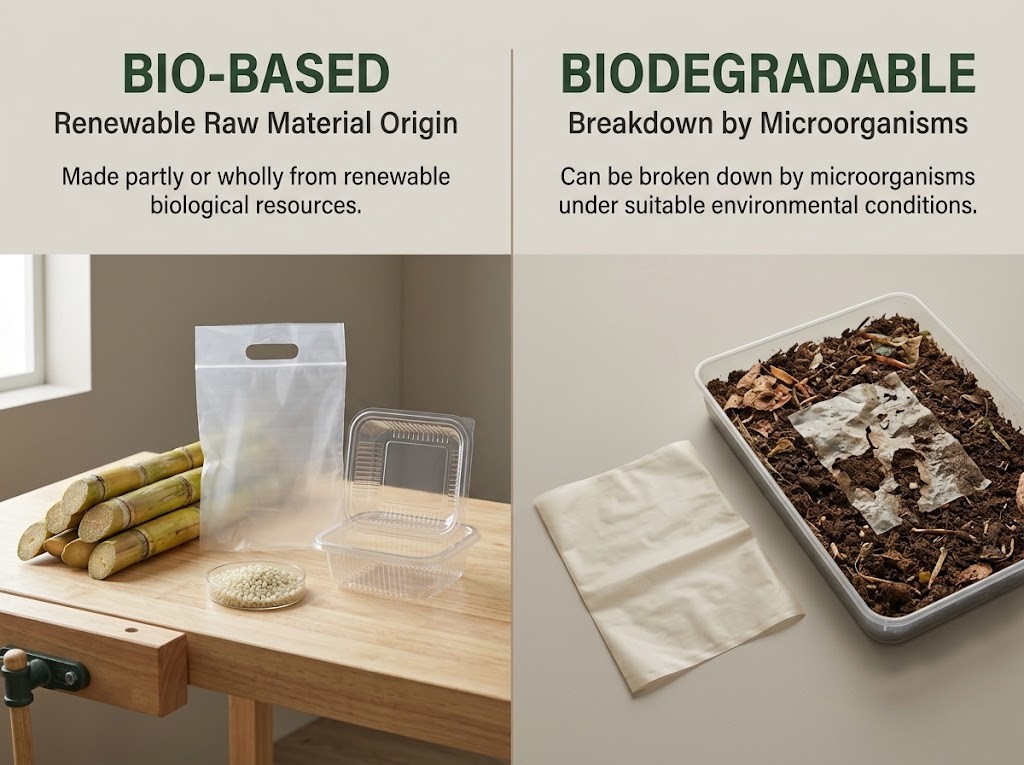
What Is the Difference Between Bio-Based and Biodegradable?
Examples of Bio-Based and Biodegradable Materials
Material
Bio-Based
Biodegradable
Bio-PE
Yes
Generally no under ordinary environmental conditions
Bio-PET
Yes
Generally no under ordinary environmental conditions
PLA
Often, depending on formulation
Under specified conditions
PBAT
Typically fossil-based, although bio-based variants may exist
Under specified conditions, depending on formulation and testing
Biodegradable Does Not Automatically Mean Compostable
What Should Packaging Buyers Verify?
How to Choose the Right Material
Frequently Asked Questions
Is Every Bio-Based Plastic Biodegradable?
Is Biodegradable Plastic Always Compostable?
Can PLA Be Composted at Home?
Does Bio-Based Mean Environmentally Better?