Alternatives for Plastic Bags: A 2026 Decision Guide for Brands, Retailers, Bakeries, and Sustainability Leaders
- Share
- publisher
- Rachel
- Issue Time
- Jun 11,2026
Summary
Paper bags, reusable bags, recyclable plastic bags, biodegradable plastic bags, and compostable bags each have advantages and limitations. Choosing the right option requires understanding sustainability claims, regulations, disposal infrastructure, certifications, and long-term business goals.
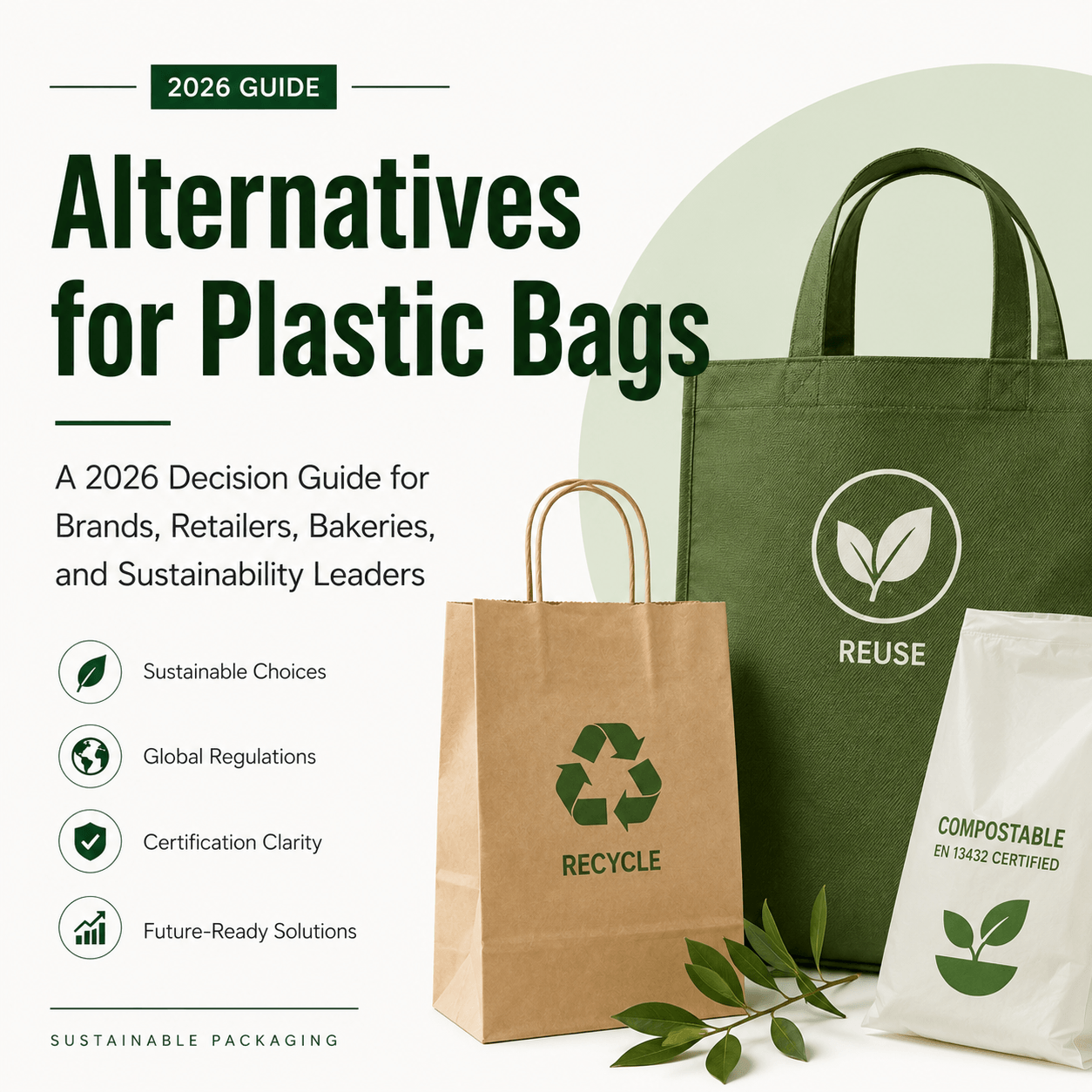
Navigate global regulations (PPWR, Canada, US, Latin America) and choose the right alternative — compostable, recyclable, paper, or reusable — with data and certification clarity.
As governments tighten plastic regulations and consumers demand more sustainable packaging, businesses worldwide are rethinking one of the most common packaging items: the plastic bag. From supermarkets and bakeries to retail chains and food brands, organizations face pressure to reduce conventional plastics while maintaining product performance, customer convenience, and compliance.
Paper bags, reusable bags, recyclable plastic bags, biodegradable plastic bags, and compostable bags each have advantages and limitations. Choosing the right option requires understanding sustainability claims, regulations, disposal infrastructure, certifications, and long-term business goals.
This guide explains the most practical alternatives for plastic bags, compares available options, and helps brands, retailers, bakeries, procurement teams, and sustainability professionals make informed packaging decisions in 2026 and beyond.
Why Businesses Are Looking for Alternatives to Plastic Bags
The shift away from conventional plastic bags is driven by two powerful forces: regulation and consumer expectations. Across Europe, North America, and Latin America, governments introduce stricter measures to reduce plastic waste. At the same time, consumers increasingly expect measurable environmental responsibility.
However, not all alternatives offer the same environmental benefits, compliance advantages, or operational performance.
Main Alternatives for Plastic Bags
Renewable, recyclable, premium feel. Ideal for retail, bakeries, gift packaging.
Long life, reduced single-use waste. Works for supermarkets & promotional campaigns.
PCR content available, circular economy enabler. Effective where recycling infrastructure is mature.
Certified to EN 13432 or BPI. Best for organic waste, produce, bakery applications.
1. Paper Bags
Advantages: Made from renewable resources, widely accepted, customizable, premium appearance.
Limitations: Higher transport costs, low moisture resistance, greater storage footprint.
Best applications: Retail stores, fashion, bakeries, gift packaging.
2. Reusable Bags
Advantages: Reduces single-use waste, long service life, strong branding.
Limitations: Higher upfront cost, environmental benefit depends on repeated use.
Best applications: Supermarkets, retail chains, membership programs.
3. Recyclable Plastic Bags
Advantages: Familiar performance, cost-effective, reduced virgin plastic usage.
Limitations: Recycling rates vary, inconsistent collection systems.
Best applications: Grocery stores, industrial packaging, e-commerce.
※To learn more about recycled, recyclable, compostable, and biodegradable bags, read our detailed guide:Recyclable vs Recycled vs Compostable: What Buyers Should Know (2026 Procurement Guide).
4. Compostable and Biodegradable Plastic Bags
Among all alternatives for plastic bags, compostable and biodegradable options receive greatest attention. But the terms are often misunderstood.
What Are Compostable Bags Made Of?
- PLA (Polylactic acid): Derived from corn starch or sugarcane – plant-based, high transparency, industrially compostable. Used for produce bags, food packaging, retail carry bags.
- PBAT (Polybutylene Adipate Terephthalate): Flexibility and toughness, excellent tear resistance. Often blended with PLA.
- Corn starch-based materials: Renewable feedstock, reduces fossil reliance. Suitable for shopping bags, organic waste bags.
- Certified compostable blends: Most commercial bags use proprietary blends of PLA, PBAT, and starch, engineered to balance strength, flexibility, sealability, and compostability.
Alternatives for Plastic Bags – Comparison Table (2026)
| Criteria | Paper Bags | Reusable Bags | Recyclable Plastic Bags | Compostable Bags |
|---|---|---|---|---|
| Regulatory Readiness | High | High | Medium | High |
| Consumer Perception | High | High | Medium | High |
| Durability | Medium | Very High | High | High |
| Moisture Resistance | Low | High | High | High |
| Food Contact Applications | Medium | Low | High | High |
| End-of-Life Solution | Recyclable | Reusable | Recyclable | Compostable |
| Sustainability Branding Value | High | High | Medium | Very High |
| Typical Cost | Medium | High | Low | Medium-High |
| Suitable for Retail Bags | Yes | Yes | Yes | Yes |
| Suitable for Bakery Bags | Limited | No | Yes | Yes |
| Suitable for Produce Bags | Limited | No | Yes | Yes |
| Long-Term Regulatory Alignment | High | High | Medium | Very High |
Certified compostable packaging is increasingly viewed as a future-ready option where organic waste collection and composting systems exist.
Quick Recommendations by Business Type
| Business Type | Recommended Solution |
|---|---|
| Bakery | Compostable Bread Bags |
| Supermarket | Reusable Shopping Bags + Compostable Produce Bags |
| Retail Store | Paper Bags or Compostable Shopping Bags |
| Organic Food Brand | Certified Compostable Bags |
| Foodservice Business | Compostable Carry-Out Bags |
| E-commerce Brand | Recyclable or Recycled-Content Packaging |
| Sustainability-Focused Brand | EN 13432 Certified Compostable Packaging |
Always validate these recommendations against local regulations and waste infrastructure.
How to Choose the Right Alternative for Plastic Bags in 2026
Choosing sustainable packaging is increasingly a compliance decision. Evaluate these five factors:
1. Regulatory Requirements – Compliance First
EU – PPWR: The Packaging and Packaging Waste Regulation (2025/40) applies broadly from August 2026, demanding reduction, recyclability, and reuse targets. EU buyers should prioritize EN 13432 certified compostable bags, ISCC PLUS supply chains, and PPWR-aligned documentation.
Canada: Single-use Plastics Prohibition Regulations prohibit conventional plastic checkout bags. Prioritize reusable-first strategies, certified compostable alternatives, or paper carry bags.
United States: No federal ban; state-level rules expand (California SB 1053 in 2026). Prioritize BPI-certified compostable products and accurate labeling.
Latin America: Chile, Colombia, Peru, Argentina strengthen single-use plastic regulations. Focus on internationally recognized certifications and future-ready compliance documentation.
📋 2026 Packaging Compliance Checklist – Before approving any packaging supplier, ask:
- ✓ Does the bag comply with regulations in my target market?
- ✓ Is the material supported by recognized certifications?
- ✓ Does local infrastructure support recycling or composting?
- ✓ Can the supplier provide compliance documentation?
- ✓ Will this packaging remain compliant over the next three to five years?
2. Product Performance
Evaluate load capacity, tear resistance, moisture resistance, seal strength, food-contact performance, and shelf-life requirements. Sustainability must not compromise functionality.
3. End-of-Life Infrastructure
Compostable packaging performs best where industrial composting exists; recyclable where recycling systems are mature; reusable when customers repeatedly reuse. Align with local waste systems.
4. Certifications and Verification
| Certification | Purpose |
|---|---|
| EN 13432 | Industrial Compostability (EU) |
| BPI | North American Compostability |
| DIN CERTCO | Compostability Verification |
| FSC | Responsible Forestry |
| ISCC PLUS | Sustainable Supply Chain Traceability |
5. Total Cost of Ownership (TCO)
Beyond material cost, consider transportation, storage, compliance, waste management, brand value impact, and long-term regulatory risks. The lowest-cost option today may not be the most economical tomorrow.
The Future of Plastic Bag Alternatives
Future trends: increased certified compostable adoption, higher recycled-content mandates, expansion of Extended Producer Responsibility (EPR), stronger ESG reporting, and greater scrutiny of environmental claims. Businesses that adapt packaging strategies proactively will remain competitive.
Key Takeaways
If You Sell Products in Europe
Prioritize packaging that aligns with PPWR requirements and consider EN 13432-certified compostable solutions where appropriate.
If You Sell Products in Canada
Avoid reliance on traditional plastic checkout bags and evaluate reusable, paper-based, or certified compostable alternatives.
If You Operate Across Multiple U.S. States
Review state-specific requirements and ensure environmental claims are supported by recognized certifications.
If You Export to Latin America
Focus on internationally recognized certifications and future-ready compliance documentation.
If Sustainability Is Part of Your Brand Strategy
Look beyond material claims and evaluate real-world end-of-life outcomes, certification status, and long-term regulatory alignment.
There is no universal replacement for conventional plastic bags. The best alternative depends on product requirements, customer expectations, local regulations, and waste management infrastructure.
For many brands, retailers, bakeries, and sustainability-focused organizations, certified compostable packaging is emerging as one of the most promising solutions because it combines functionality, regulatory readiness, and environmental responsibility.